
Most bunches of green onions get used once. The green tops go into a stir-fry or onto a baked potato, and the white root ends go straight into the trash. Those root ends can grow you more green onions, though, and all you need is a glass of water and a bright window.
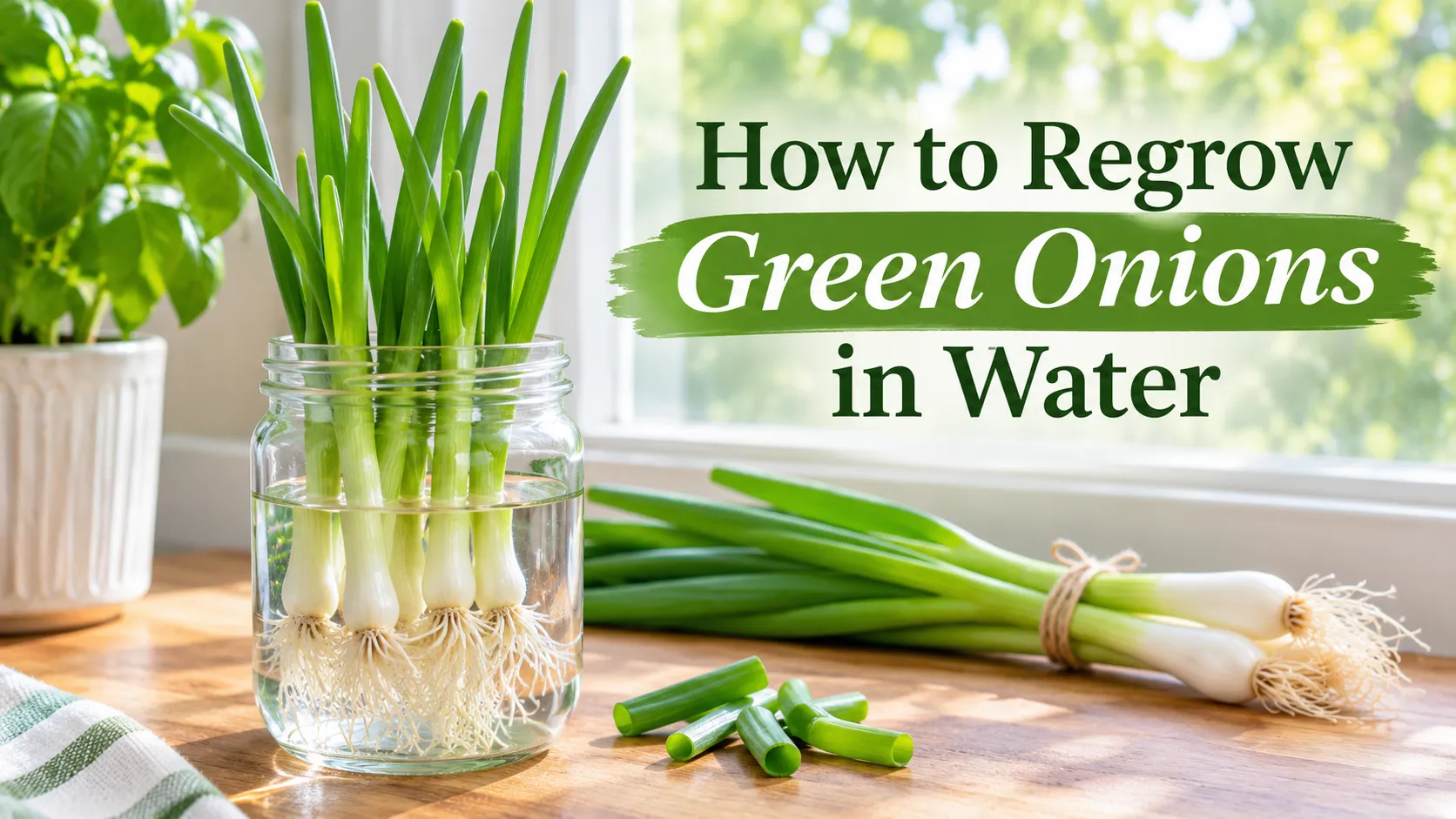
Here’s how to regrow green onions in water: stand the root ends in a glass, add just enough water to cover the roots, and set it in a sunny window. Change the water every few days, and you’ll usually have fresh shoots to snip within a week or two. Below, you’ll find the full setup, how to keep the water clean, how many harvests to expect, and when to move your onions into soil so they keep producing for months instead of weeks.
Why Green Onions Regrow So Easily
Green onions, scallions, and bunching onions are different names for the same kind of crop. Many of the green onions sold in U.S. grocery stores are actually young bulbing onions (Allium cepa) picked before they form a bulb. True bunching onions (Allium fistulosum) never form a large bulb at all. Either type will usually regrow from the root end.
It works because the white base stores energy, and the roots are often still alive when you buy the bunch. Put those roots in water, give the plant light, and it draws on that stored energy to push new leaves up from the center.
Keep one thing in mind from the start. Plain water gives the plant moisture, not food. Your onions are living off what’s stored in the base, which is why water-grown regrowth slows down after a few rounds. We’ll come back to that, because it’s the key to getting green onions “again and again.”
What You’ll Need
The setup is about as basic as gardening gets:
- A bunch of green onions with the roots still attached
- A narrow glass, small jar, or cup
- Clean tap water
- A sunny windowsill
- Kitchen scissors
When you shop, pick a bunch with firm white bases and light-colored roots. Skip any with slimy or mushy bottoms. A narrow container helps too, since it holds the onions upright so they don’t flop over the rim.
How to Regrow Green Onions in Water: Step by Step
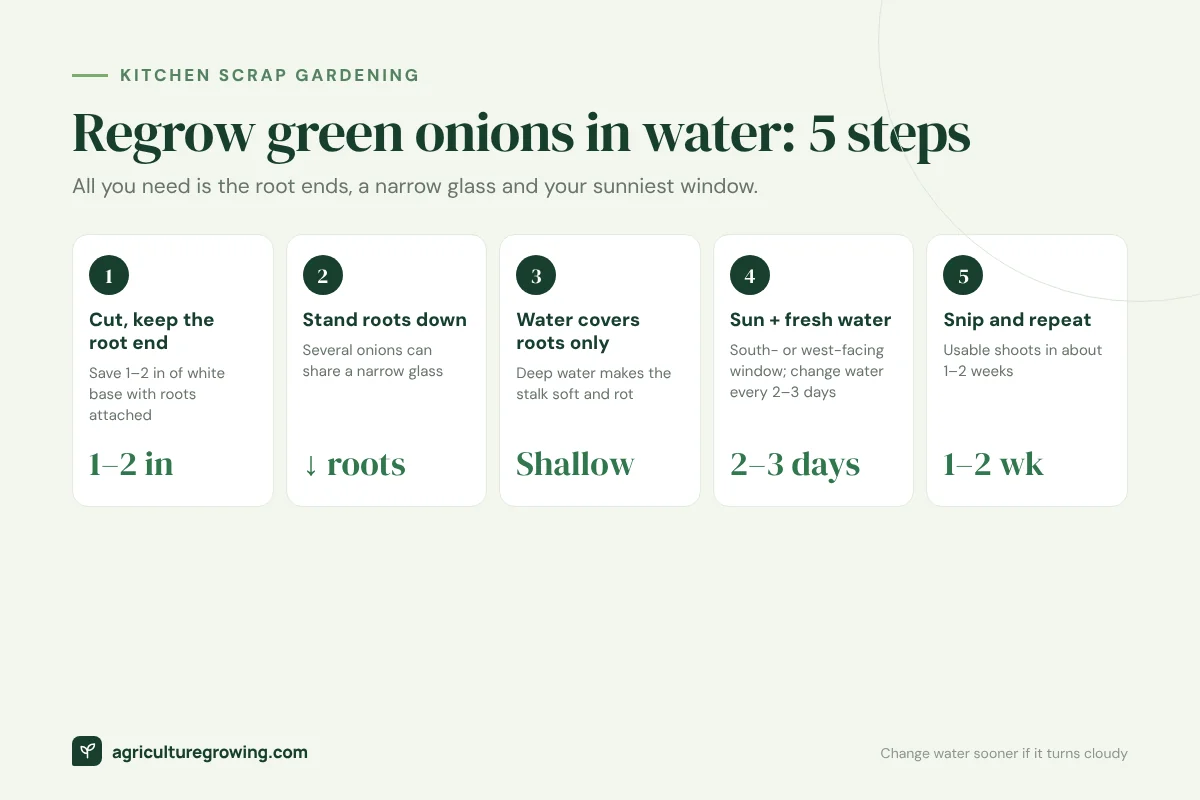
- Cut the onions, leaving the root end. Use the green tops in your cooking. Keep the white part with the roots attached, about 1 to 2 inches long. Leaving a little of the pale green section above the white often helps the plant regrow faster.
- Stand them root-side down in your glass. Several onions can share one container as long as they aren’t packed in tightly.
- Add just enough water to cover the roots. The roots and the bottom of the white base should be underwater. Don’t submerge the whole stalk. Deep water can turn the stalk soft and start it rotting.
- Place the glass in a warm, sunny spot. In most U.S. homes, a south- or west-facing window gets the most light. In winter, avoid a sill that gets icy cold at night.
- Change the water every two to three days. Pour out the old water and refill the glass. If it turns cloudy before then, change it sooner.
- Wait for new growth. You’ll often see a bit of fresh green poking out of the center within several days. Most onions reach a usable height in one to two weeks.
That’s all the setup there is. From here, success mostly comes down to clean water and enough light.
How to Keep the Water Fresh
When this project goes wrong, the culprit is usually the water, not the onion. Still water grows bacteria fast, especially in a warm kitchen, and that leads to slimy roots and a sour smell.
A few habits prevent most of that trouble:
Don’t wait for cloudy water. Change it every two to three days, and sooner in a warm kitchen.
Rinse the container, too. A film can build up on the inside of the glass. A quick rinse with warm water clears it.
Peel away anything slimy. If the outer layer of a base turns soft, gently pull it off before putting the onion back.
Top off the water between changes. As the roots grow longer, they take up water faster. A level that covered the roots on Monday may leave them partly dry by Wednesday.
How to Harvest Without Stopping Growth
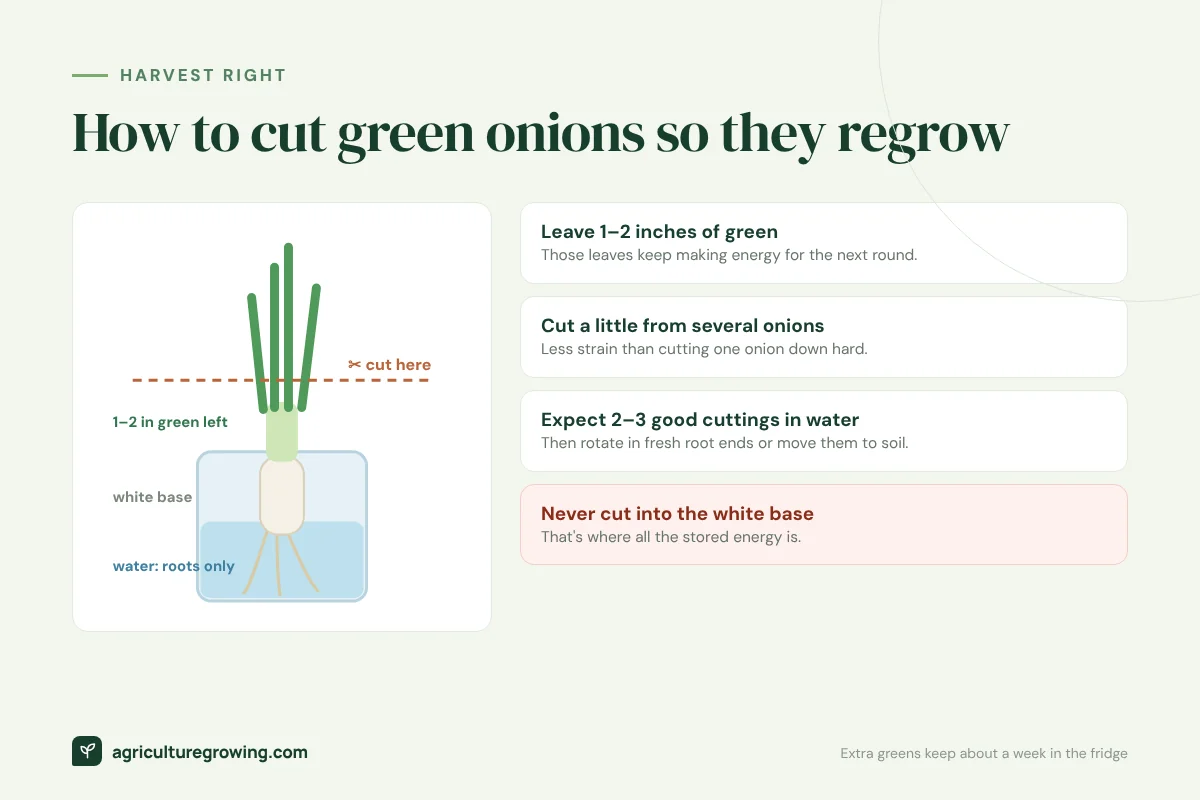
Once the shoots are several inches tall, you can start cutting. Snip the green leaves with scissors, and leave at least an inch or two of green above the white base. Never cut into the white part itself.
Those leftover leaves matter. They let the plant keep making a little energy from light, which supports the next round of growth. A plant cut down to a bare stub has to rely entirely on its shrinking reserves.
It also helps to cut only what you need. Taking a few leaves from several onions puts less strain on each plant than cutting one onion down hard.
If you harvest more than you can use right away, store the greens in a plastic bag in the refrigerator. They’ll usually keep for about a week.
How Many Times Can You Regrow Them in Water?
Here’s the honest answer. In water alone, a green onion base can keep sending up shoots for weeks or even a few months. Each round usually comes back a little thinner than the last, though, and you can expect roughly two or three good cuttings before growth fades.
You’ll know a base is finished when it:
- Shrinks or looks hollow
- Turns soft or mushy
- Sends up only thin, pale shoots that flop over
At that point, you have two ways to keep the green onions coming.
Option 1: Rotate in fresh root ends. Every time you buy a new bunch, start those root ends in water and retire the oldest ones to the compost. With two or three glasses going at different stages, you’ll rarely run out.
Option 2: Move them into soil. This is the better choice if you want the same plants to keep producing. Soil gives the onions the nutrients water can’t, and the shoots usually come back thicker and stronger.
Water vs. Soil: A Quick Comparison
| Growing in Water | Growing in Soil | |
|---|---|---|
| Setup | Glass and a sunny window | Pot with drainage holes and potting mix |
| Nutrients | Only what’s stored in the base | Supplied by the soil |
| How long it produces | A few weeks to a few months | Much longer with good care |
| Shoot quality | Gets thinner over time | Thicker and stronger |
| Main risk | Slimy, rotting roots | Overwatering |
Many people use both: water to get the roots going, then soil for long-term harvests.
How to Move Green Onions From Water to Soil
Transplant once the new shoots reach about 4 to 5 inches and the roots look healthy and white.
- Choose a container at least 6 inches deep with drainage holes in the bottom. A window box or a medium pot works well.
- Fill it with a quality potting mix. Garden soil packs down in pots and drains poorly. If you’d like to enrich the mix, our look at compost vs. chemical fertilizer for vegetables explains the trade-offs.
- Plant the bases about an inch or two apart. Set each one so the white part sits just below the soil surface and the green shoots stick up above it.
- Water thoroughly, then let the top of the soil dry slightly before watering again. Pots dry out faster than garden beds, so check them often in warm weather.
- Give them as much sun as possible. Onions grow best in full sun. Outdoors, part sun will still work. Indoors, use your brightest window.
If you plan to grow them outside, timing matters. One easy approach is to start root ends in water in late winter, then transplant them outdoors after your last spring frost. Your local cooperative extension office can tell you the average frost date for your area.
Common Problems and How to Fix Them
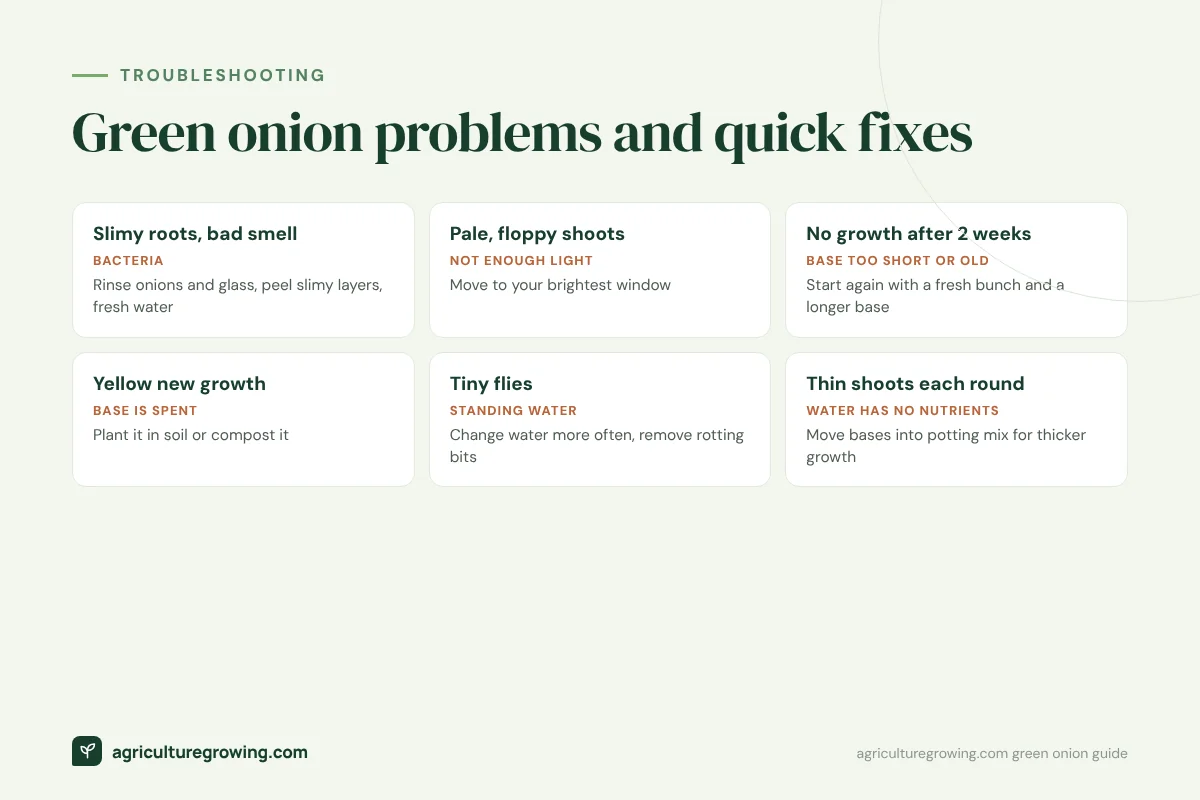
Slimy roots or a bad smell. This is bacteria. Rinse the onions and the glass, peel off any slimy layers, and refill with fresh water. If the whole base feels mushy, throw it out and start over.
Pale, floppy shoots. The plant isn’t getting enough light. This happens a lot in winter. Move the glass to a brighter window, or accept slower growth until the days get longer.
No new growth after two weeks. The base may have been cut too short, the roots may have dried out before you put them in water, or the bunch may have been old. Try again with a fresh bunch and leave a slightly longer base.
Brown or yellow leaf tips. Older leaves often brown at the tips as they age. Snip them off. If new growth is also yellowing, the base is likely running out of energy and is ready for soil or the compost bin.
Tiny flies around the glass. Fruit flies and gnats can be drawn to standing water and bits of decaying plant. Change the water more often and remove any rotting pieces.
Frequently Asked Questions
How long does it take to regrow green onions in water?
New green growth often appears within several days. Most onions reach a height worth harvesting in about one to two weeks. Warmth and strong light speed things up, while a cool, dim window in winter slows them down.
Should I add fertilizer to the water?
It isn’t necessary for short-term regrowth, since the onion runs on energy stored in its base. If you want long-term production, moving the onions into potting mix is a better step than adding fertilizer to a jar. Nutrients in still, sunlit water can also encourage algae.
Can you regrow green onions without roots?
You need the root end: the flat base at the bottom of the white part, where roots grow. If the roots were trimmed but that base is intact, it may still grow new roots. If the base was cut off entirely, it won’t regrow.
Can you regrow green onions in soil instead of water?
Yes. You can plant the root ends straight into a pot of moist potting mix, with the white part just below the surface. Water is handy for watching roots form and for quick harvests, while soil supports stronger growth over a longer stretch.
Can I keep green onions growing in water all winter?
Yes, as long as they get enough light. Growth will be slower during short winter days. To keep a steady supply, start a new glass with fresh root ends every few weeks as the older ones wear out.
Final Thoughts
Regrowing green onions in water is one of the easiest ways to start growing food at home, and it costs almost nothing. Keep the water shallow and fresh, give the glass your sunniest window, and always leave some green behind when you cut. When the shoots start coming in thin, don’t treat it as a failure. That’s your cue to either start a fresh batch or plant the bases in a pot of soil. If this gets you hooked, our guide to tomatoes vs. peppers for beginners is a good next step.