
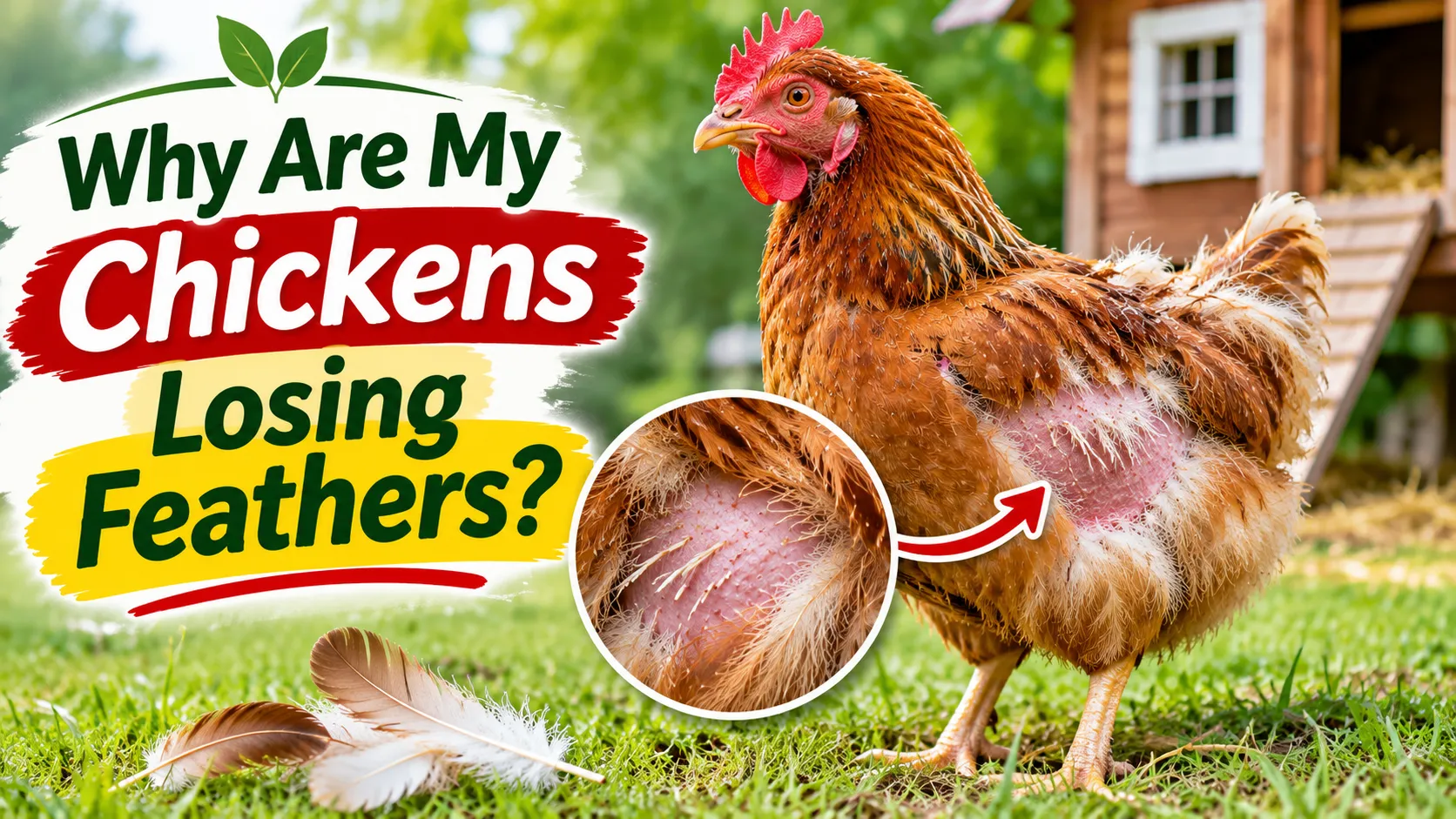
You open the coop one morning and there are feathers everywhere. One of your hens looks like someone started plucking her and gave up halfway. If you’re asking, “Why are my chickens losing feathers?” the most likely answer is molting. It’s a normal yearly process where chickens shed old, worn feathers and grow a fresh set, usually in the fall as the days get shorter.
Molting isn’t the only explanation, though. Pecking from other hens, a rough rooster, mites, lice, a broody hen, and a poor diet can all leave bare patches. Some of these sort themselves out. Others need your help quickly.
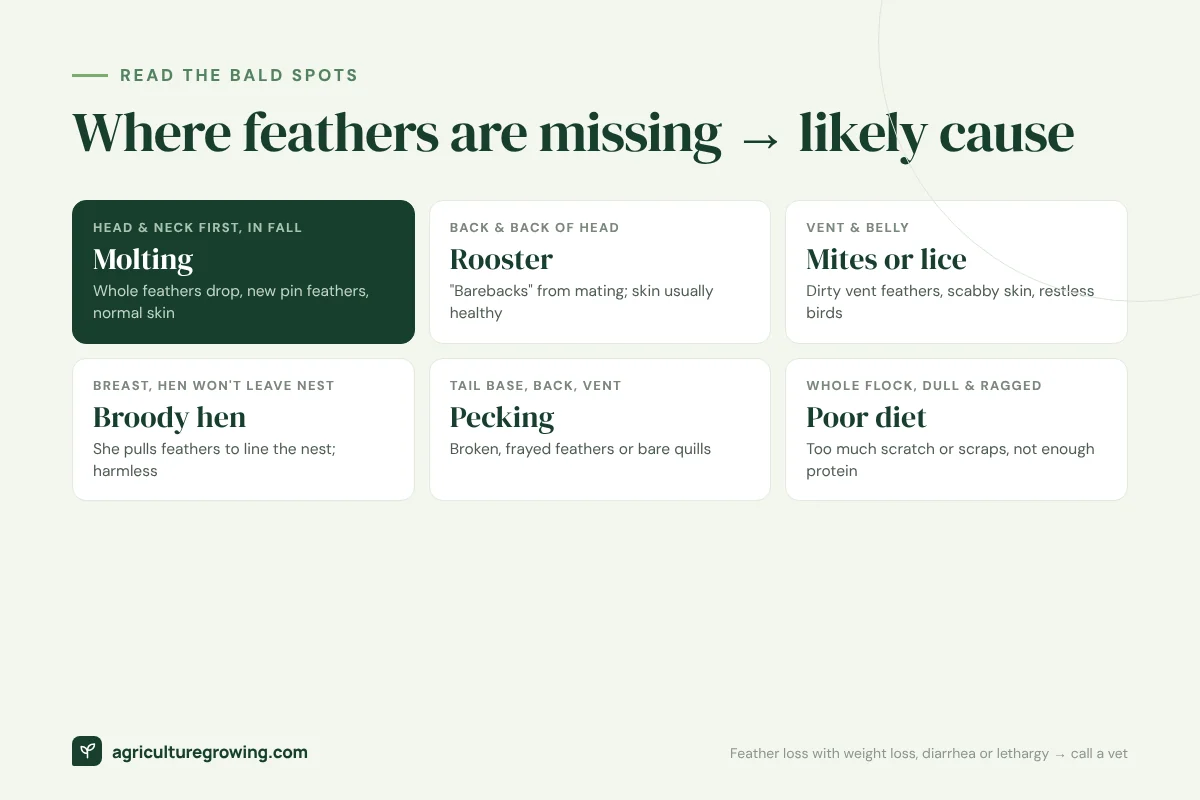
Luckily, where and how the feathers go missing usually points you to the cause.
Molting or Something Else? The Quick Way to Tell
Molting is usually gradual, happens in the fall, and moves across the body in a set order. Other problems tend to leave one bare spot, broken feathers, or sore skin, and they can show up any time of year.
Here are the clues worth comparing:
| What to look at | Points to molting | Points to a problem |
|---|---|---|
| Time of year | Late summer through fall | Any season |
| Where feathers are missing | Starts at the head and neck, then moves down the body | Back, vent, tail base, breast, or one specific spot |
| Feather condition | Old feathers fall out whole | Broken, frayed, or chewed feathers |
| New growth | New pin feathers push through the skin | Little regrowth while the cause continues |
| Skin | Looks normal | Red, scabby, crusty, or bleeding |
| Egg laying | Slows or stops | May drop, often with other symptoms |
| Bird behavior | Quiet but still eating | Scratching, restless, hiding, or being chased |
If most of what you see matches the middle column, your hen is probably molting. If several signs fit the right column, one of the causes further down is more likely.
How Normal Molting Works
Feathers are dead material, a lot like your hair or fingernails. Once they break or wear down, they can’t repair themselves. So about once a year, a grown chicken drops her old feathers and grows a new coat before winter.
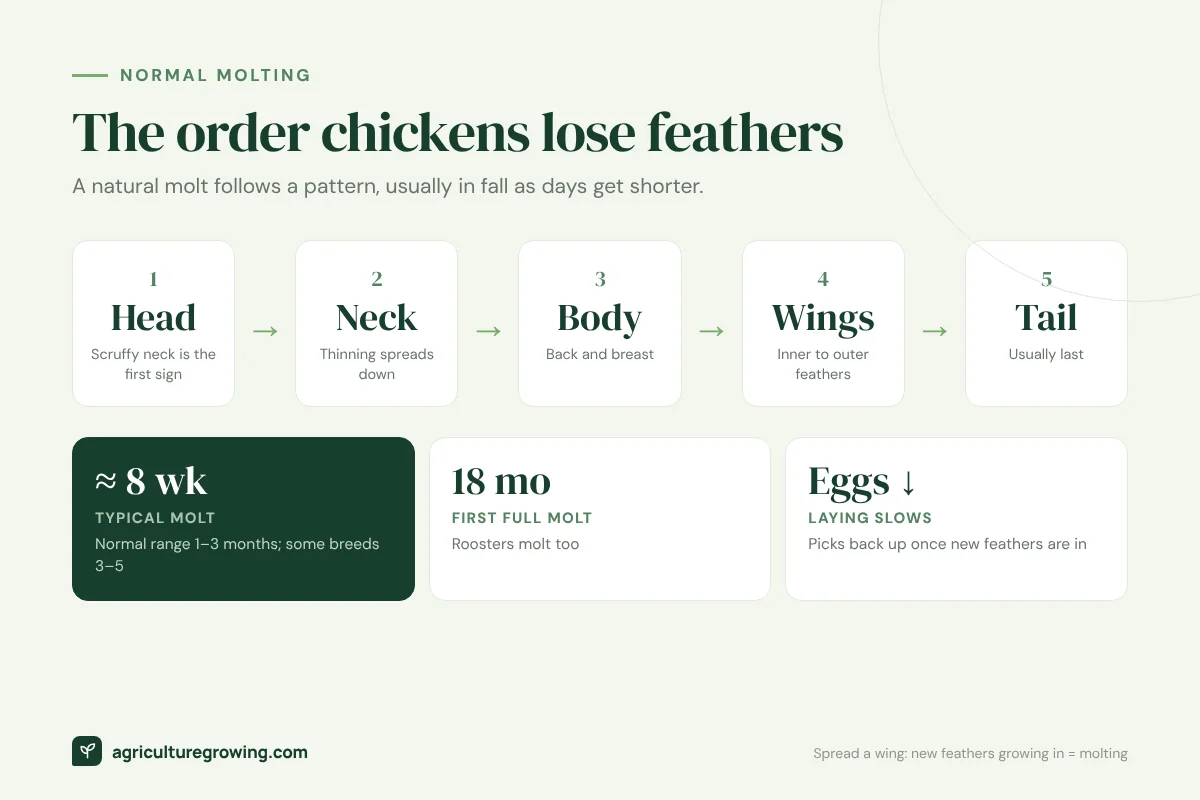
Shorter days set it off, more than cooler weather does. That’s why most backyard flocks molt in the fall. Most chickens have their first full adult molt at around 18 months old. Roosters molt too, even though they don’t lay eggs.
The order feathers fall out
Molting follows a pattern. Feathers are usually replaced in this order: head, neck, body, wings, and then tail. So a molting hen often looks scruffy around the neck first. Then the thinning spreads to her back and breast.
The long wing feathers drop in order too, starting near the body and working out toward the wingtip. Gently spread a hen’s wing. If a few long feathers are missing and new ones are growing in, she’s almost certainly molting.
How long molting lasts
A typical molt takes about eight weeks from the first dropped feather to a full new coat. The normal range is about one to three months. Some older or fancy breeds take three to five months.
Hens don’t all molt the same way, either. One might lose a few feathers at a time, so you barely notice. Another might shed fast and look almost bald for a while. Hens that molt late in the season often drop and regrow their feathers faster, so the hen who looks worst may finish first.
Why your hens stop laying
Feathers are made mostly of protein, and growing a whole new set takes a lot of it. That’s why hens usually slow down or stop laying during a molt. It’s normal, and it’s temporary. Once the new feathers are in, laying usually picks back up, often with better shells than before.
How to Help a Molting Chicken
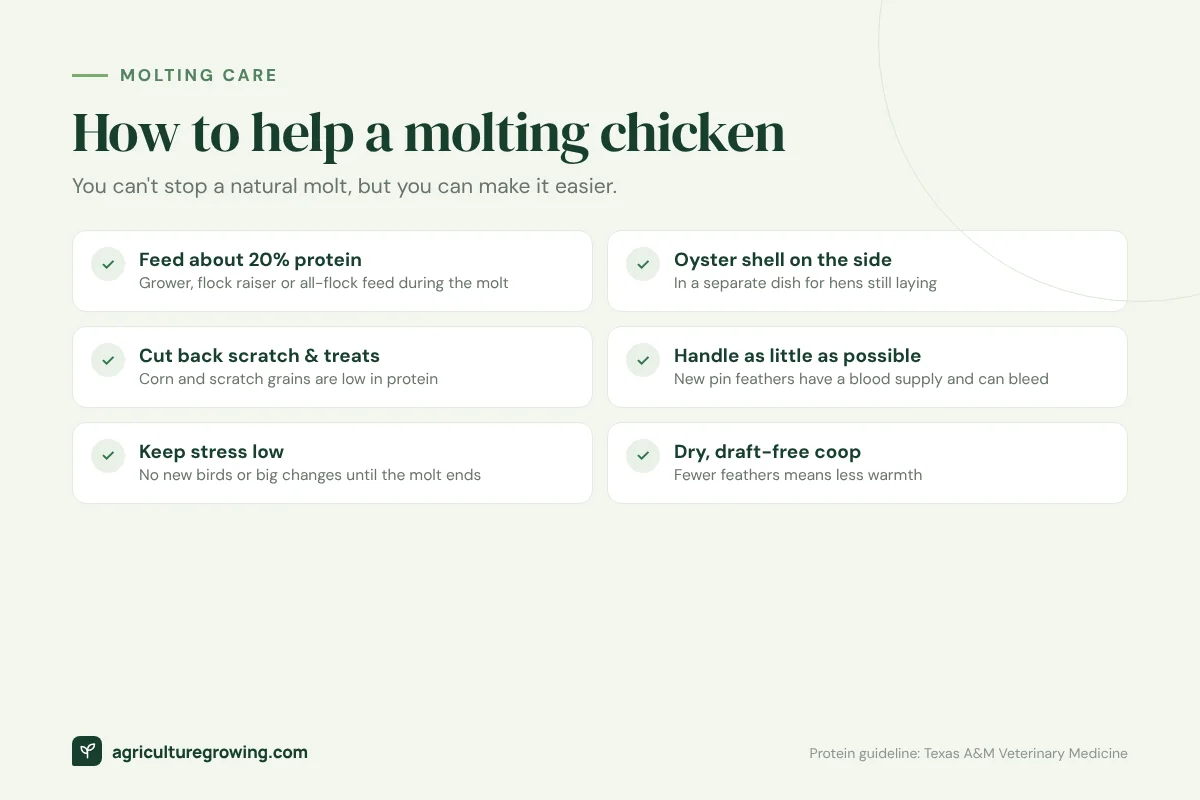
You can’t stop a natural molt. You can, however, make it easier on your birds.
- Give them more protein. Veterinarians at Texas A&M say a feed with about 20% protein is usually enough during a molt, though your own vet can tell you what suits your flock. Feed stores often sell higher-protein feeds labeled “grower,” “flock raiser,” or “all-flock.” If you switch away from layer feed, put oyster shell in a separate dish so any hens still laying can get calcium.
- Go light on scratch and treats. Corn and scratch grains are low in protein. Filling up on them means your hens eat less of the feed that actually helps them regrow feathers.
- Handle them as little as you can. New feathers come in as pin feathers, which have a blood supply. They’re tender, and they can break and bleed if you pick up a hen too often.
- Keep stress low. Hold off on adding new birds, moving the coop, or changing routines until the molt is over. Keep an eye out for pecking, too, since bare skin can draw attention.
- Cover the basics. Fresh water and feed should always be available. A dry, draft-free coop matters more when your birds have fewer feathers to keep warm.
Some keepers add artificial light in the fall to delay molting and keep eggs coming. Chickens still need to replace worn feathers sooner or later, though. Forced molting, which commercial egg farms use, isn’t something to try in a backyard flock without advice from an extension specialist.
Other Reasons Chickens Lose Feathers
When the signs don’t match a normal molt, look at these causes next.
Feather pecking from flock mates
Pecking leaves a different kind of damage than molting. You’ll usually see broken or frayed feathers, sometimes with nothing left but the bare quill. The bald spots tend to show up on the back, at the base of the tail, or around the vent.
Boredom, crowding, bright lights, or a diet low in protein can all set it off. Usually one or two birds start it, and others copy them. Once the skin is broken, the red patch draws even more pecking. In bad cases, this can turn into cannibalism.
Here’s how to break the cycle:
- Spend some time watching the flock to spot the bird doing the pecking. Moving her out for a few weeks can sometimes end the habit.
- Give your birds more room, or keep fewer birds in the same space.
- Offer something else to peck, like a hanging head of cabbage or a pile of leaves to scratch through.
- Use a lower-wattage bulb if you light the coop.
- Move any bird with an open wound to a separate pen until it heals.
Rooster damage
A rooster can wear the feathers off a hen’s back and the back of her head during mating. Keepers often call these hens “barebacks.” It gets worse when the rooster is very heavy or there are too many roosters for the number of hens.
Usually the skin underneath looks healthy, just exposed. Mild cases don’t need any fix. If a hen’s back is getting scratched up, a fabric hen saddle can protect it. You can also separate the rooster for part of the day or rehome extra males.
Mites and lice
These pests are easy to miss, so check for them even if you’re sure your hens are molting. Mites and lice tend to build up in the cooler months, which is exactly when most molts happen.
Feather loss around the vent and belly is a classic sign of northern fowl mites or poultry lice. You might also see dirty-looking feathers near the vent, scabby skin, restless birds, pale combs, or fewer eggs.
To check, pick up a hen and part the feathers around her vent and under her wings. A flashlight helps, especially at night. Look for:
- Small, straw-colored insects running across the skin (lice)
- Clumps of whitish eggs stuck to the base of the feathers (lice eggs)
- Tiny dark or reddish specks crawling on the skin or feathers (mites)
Some mites hide in cracks around roosts and nest boxes during the day and come out to feed at night. Scaly leg mites live under the scales on the legs and feet, which makes the scales look raised and crusty.
If you find parasites, treat the whole flock and the coop, not just one bird. Mites hiding in the coop will crawl right back onto treated birds. Use a product labeled for poultry and follow the label exactly, including any rules about eating the eggs. You’ll usually need to repeat the treatment, often 5 to 7 days later or as the label directs, because new pests hatch from eggs the first round missed. Your vet or local extension office can suggest a product approved in your state.
Broody hens
A hen that wants to hatch eggs often pulls out her own breast feathers. She lines the nest with them, and the bare skin left behind, called a brood patch, helps keep the eggs warm.
Does your hen sit flat in the nest box all day, puff up when you come close, and peck your hand? Then she’s probably broody. The bare spot is harmless, and the feathers will grow back.
Poor nutrition
Good feathers need protein and certain amino acids, especially one called methionine. Flocks that live mostly on kitchen scraps, scratch, or corn may not get enough. Signs include dull, ragged feathers across the whole flock, slow regrowth, and birds eating loose feathers.
The fix is to feed a complete commercial feed made for your birds’ age, whether that’s chicks, growing pullets, or laying hens. Feather problems from diet are rare in small flocks that eat balanced feed as their main food.
Stress, weather, and illness
Very hot or cold weather, illness, and running short on feed or water can all cause feather loss or poor-quality feathers. Birds missing a lot of feathers also burn more energy staying warm, so they often eat more.
Feather loss on its own is rarely an emergency. But if it comes with weight loss, diarrhea, swelling, sneezing, or a hen who seems sluggish or stops eating or drinking, call a vet.
Frequently Asked Questions
Will my chicken’s feathers grow back?
In most cases, yes. After a molt, they come back on their own. Feathers lost to pecking, mating, or broodiness usually regrow once the cause stops. Feathers that broke off partway, though, often stay ragged until the next molt replaces them.
Why is my chicken losing feathers in spring or summer?
Feather loss outside the fall usually points to pecking, a rooster, broodiness, or parasites. Look at where the feathers are missing. A bare back suggests a rooster. A bare breast on a hen who won’t leave the nest suggests broodiness. Loss around the vent suggests mites or lice.
Do all my chickens molt at the same time?
No. Each bird follows her own schedule, so one hen can be molting heavily while another looks perfectly fine. Age, breed, and overall health all affect when a molt starts and how long it lasts.
Can I eat eggs from hens treated for mites?
That depends on the product. Some poultry treatments let you keep eating the eggs, while others require a waiting period. Read the label carefully, and ask your vet or extension office if the instructions aren’t clear.
Final Thoughts
A pile of feathers in the fall usually just means your chickens are molting. Give them extra protein, handle them gently, and give it a couple of months. They’ll come out of it with a full, glossy new coat.
A single bald spot, broken feathers, sore skin, or feather loss in spring or summer deserves a closer look. Start with a quick check around the vent and under the wings, then spend a few minutes watching how your birds treat each other. Between those two checks, you’ll usually find the cause.