
Starting a garden is one of the most rewarding decisions you can make, whether you have a sprawling backyard or just a few containers on a balcony. And if you’re a new gardener trying to decide what to grow first, chances are you’ve narrowed your list down to two popular options: tomatoes and peppers. Both are staples in home gardens across the country, both produce generous harvests, and both can be grown in a wide range of climates. But which one is actually better for someone just getting started?
That’s the question we’ll answer in this post. We’ll compare tomato and pepper plants across several important categories—ease of growing, pest and disease management, climate tolerance, harvest potential, and more—so you can make an informed decision before you put a single seed in the ground.
A Quick Overview of Both Crops
Before we get into the details, let’s set the stage with a brief look at what makes each crop unique.
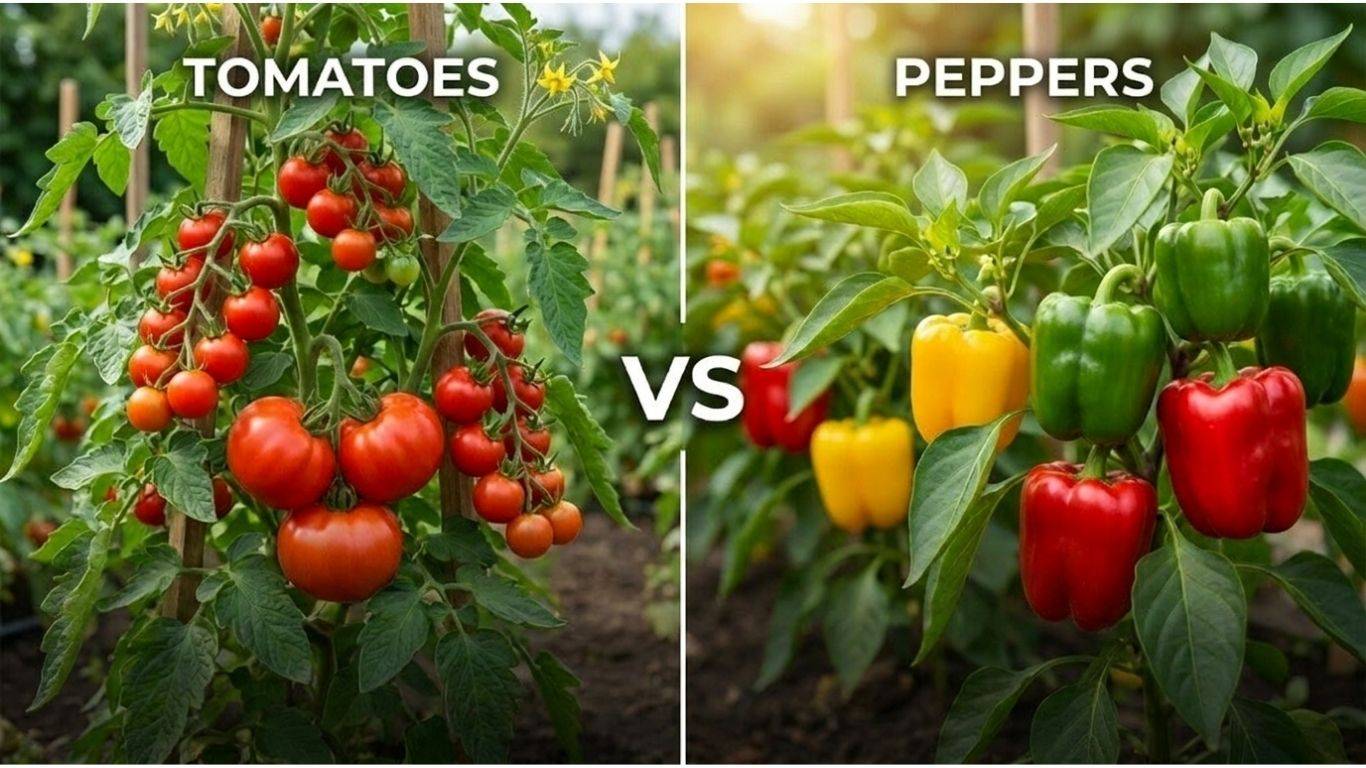
The tomato is arguably the most popular vegetable (technically a fruit, but let’s not split hairs) grown in home gardens. Tomato plants come in two main growth habits: determinate and indeterminate. Determinate varieties grow to a fixed height, set their fruit all at once, and then stop producing. Indeterminate types, on the other hand, keep growing and producing fruit throughout the whole season until frost finally shuts them down. This distinction matters quite a bit for beginners because it affects how much space you need, how you’ll support the plant, and how long your harvest window will be.
Peppers, meanwhile, are part of the same plant family (Solanaceae) as tomatoes, which means they share many growing requirements. However, peppers tend to be more compact plants with a bushier growth habit. They range from sweet bell peppers and colored bells to fiery hot varieties. For beginners, sweet bell pepper varieties are often the go-to choice because they’re versatile in the kitchen and relatively straightforward to grow.
Now that we have a foundation, let’s break this comparison down category by category.
Seed Starting and Early Growth
One of the first things any new gardener needs to consider is how to get plants started. Both tomato and pepper plants are typically started indoors from seed several weeks before the last frost date, then moved outdoors as transplants once the weather warms up.
Here’s where the first real difference shows up: seed starting for peppers often requires a bit more patience. Pepper seeds germinate more slowly than tomato seeds, often taking 10 to 14 days compared to the 5 to 7 days that most tomato seeds need. Pepper seedlings also grow more slowly in their early weeks, which means you’ll need to start them a week or two earlier than tomatoes if you want both crops ready to transplant at the same time.
On the flip side, tomato seedlings can get leggy quickly if they don’t receive enough sunlight during their indoor phase. They grow fast and demand strong light right from the start. If you don’t have a good grow light setup, your tomato seedlings might stretch toward the nearest window, becoming weak and spindly.
For a beginner who doesn’t want to bother with seed starting at all, both crops are widely available as transplants at nurseries and garden centers in spring. Buying transplants removes the germination challenge entirely and gives you a head start on the season. So in terms of accessibility, this one is a tie.
Space Requirements and Plant Structure
Space is a major factor for beginners, especially those working with limited garden beds or containers. This is one area where peppers have a clear advantage.
Most pepper plants, particularly bell peppers and other sweet varieties, stay relatively compact. They typically reach two to three feet tall and don’t spread aggressively. You can grow them in containers as small as five gallons, and they rarely need elaborate support systems. A simple stake or small cage is usually enough to keep a pepper plant upright once it’s loaded with fruit.
Tomatoes, by contrast, can be space hogs—especially indeterminate varieties. An indeterminate tomato plant can easily reach six to eight feet tall and spread several feet wide if left unsupported. Even determinate varieties, while shorter, still tend to be larger and more sprawling than the average pepper plant. You’ll almost certainly need a sturdy cage, a stake system, or a trellis to keep your tomato plant growing in a manageable vertical fashion. Without support, the vine-like stems will flop onto the ground, making the fruit susceptible to rot and pest damage.
If you’re gardening in a small space, peppers are the more practical choice. They take up less room, require less infrastructure, and won’t shade out neighboring plants with their foliage the way a large tomato canopy can.
Sunlight and Climate Needs
Both tomatoes and peppers love sun—there’s no getting around that. Each crop needs at least six to eight hours of direct sunlight per day to produce well. However, their responses to temperature extremes differ in some important ways.
Peppers are true heat lovers. They thrive in warm conditions and actually struggle when nighttime temperatures drop below 55°F. In cooler climates, getting peppers to ripen fully can be a challenge because they need a long stretch of consistent warmth. The upside is that peppers handle extreme heat better than tomatoes. While tomato plants often drop their blossoms when temperatures climb above 90°F (a frustrating condition that halts fruit set), many pepper cultivars keep right on producing in those same conditions.
Tomatoes prefer moderate warmth—daytime temperatures between 70°F and 85°F are ideal. They don’t love the cold either, and frost will kill them outright, but they tend to produce well in a broader range of climates than peppers because they don’t need quite as much accumulated heat to ripen their fruit. Cherry tomato varieties, in particular, are famously easy to ripen even in shorter growing seasons.
So which crop has the edge here? It depends on your local climate. If you live somewhere with long, hot summers, peppers may outperform tomatoes for you. If you’re in a cooler region with a shorter season, tomatoes—especially early-maturing and cherry types—are probably the safer bet.
Watering and Moisture Management
Water management is one of the most common areas where beginners make mistakes, so it’s worth paying close attention to how each crop handles moisture.
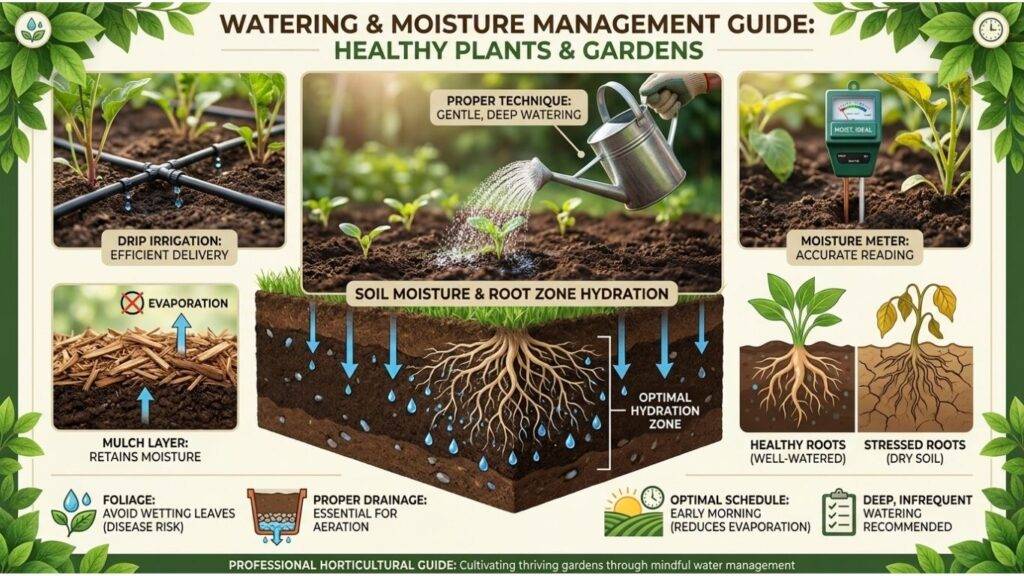
Tomatoes need consistent watering. They don’t like to dry out, but they also don’t want to sit in waterlogged soil. Inconsistent watering—going from dry to soaked—is one of the main causes of blossom end rot, a condition where the bottom of the fruit turns black and leathery. Keeping the soil evenly moist (not soggy) is the key to avoiding this problem. Mulching around the base of your tomato plant helps retain moisture and keeps the soil temperature stable.
Peppers are more forgiving with water. While they also prefer consistent moisture, they tolerate brief dry spells better than tomatoes do. Pepper plants have a more compact root system that can access water efficiently in well-prepared soil. That said, an extended drought will stress pepper plants and reduce your yield, just as it would with tomatoes.
For the beginner who might occasionally forget to water, peppers offer a slight advantage. They’re a touch more tolerant of inconsistent watering, though neither crop appreciates neglect. Regardless of which you choose, investing in a drip irrigation system or soaker hose will make your life easier and your plants healthier.
Fertilizer and Nutrient Needs
Feeding your plants properly is another area where beginners sometimes stumble. Both tomato and pepper plants are moderate to heavy feeders, meaning they need a steady supply of nutrients throughout the growing season.
Tomatoes, particularly indeterminate types, are hungry plants. They benefit from a balanced fertilizer at planting time, followed by regular feeding every 2 to 3 weeks during the growing season. Too much nitrogen, however, will give you a beautiful, lush plant with tons of foliage but very little fruit. Getting the nutrient balance right—enough phosphorus and potassium to support fruit development without overdoing the nitrogen—is something that takes a bit of practice.
Peppers have similar nutrient needs but are generally less demanding. They appreciate a good feeding at transplant time, followed by lighter applications throughout the season. Because pepper plants are smaller, they consume fewer resources overall. A beginner who applies a general-purpose vegetable fertilizer according to package directions will usually get good results with peppers without much fuss.
In this category, peppers win for simplicity. They’re less likely to punish you for minor fertilizing mistakes.
Pest and Disease Pressure
No discussion of growing vegetables would be complete without addressing pests and diseases. Both crops face their share of challenges, but the intensity and nature of those challenges differ.
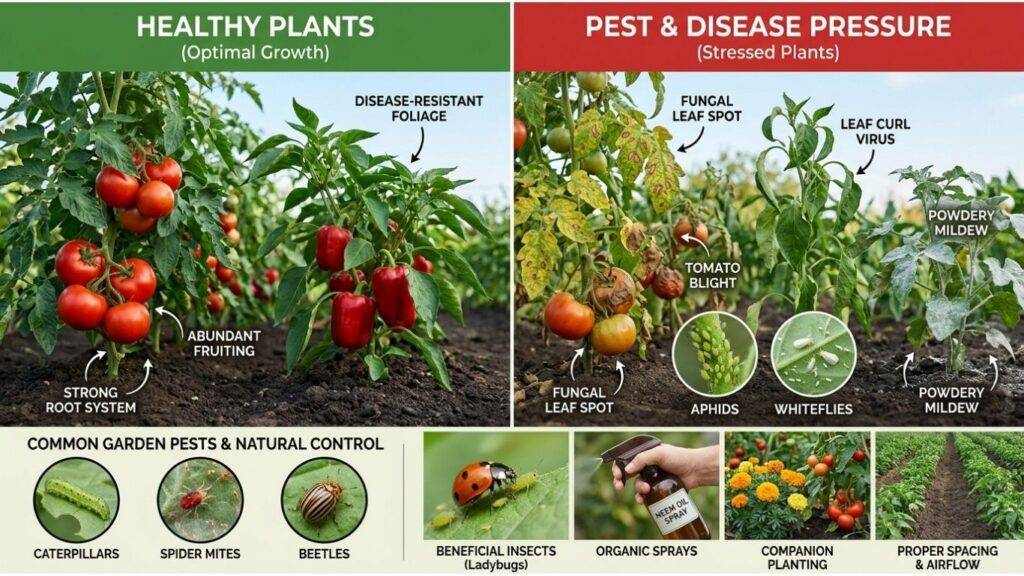
Tomatoes are notoriously susceptible to a long list of diseases. Blight—both early blight and late blight—is perhaps the most feared. These fungal diseases can destroy an entire tomato crop in a matter of days under the right (or wrong) conditions. Tomatoes are also vulnerable to various forms of wilt, leaf spot, and viral infections, such as tomato mosaic virus. On the pest side, hornworms, aphids, and whiteflies are common visitors to tomato plants.
Peppers deal with some of the same pests—aphids and whiteflies don’t discriminate—but they tend to face fewer devastating diseases than tomatoes. Peppers can get bacterial leaf spot and occasionally suffer from viral issues, but overall disease pressure is lower in most growing conditions. Their thicker skin also makes the fruit somewhat more durable against minor pest damage.
For a beginner who doesn’t want to spend the season battling disease, peppers are generally the lower-maintenance option. Tomatoes require more vigilance: regular inspection of foliage, proper spacing for air circulation, and sometimes preventive treatments to keep blight at bay.
Pruning and Maintenance
How much ongoing work does each crop need? This is a practical question that matters a lot for beginners who may be managing their garden alongside a busy life.
Indeterminate tomato plants benefit significantly from pruning. Removing suckers (the shoots that grow between the main stem and branches) helps direct the plant’s energy toward fruit production rather than excessive vegetative growth. Pruning also improves air circulation within the canopy, reducing disease risk. Beyond pruning, you’ll need to continually tie stems to their stake or guide them through their cage as the plant grows. It’s not hard work, but it is ongoing throughout the season.
Determinate tomatoes need less pruning because they have a more compact growth habit, but they still benefit from attention to airflow and support.
Pepper plants, in contrast, need very little pruning. Some gardeners like to pinch off early flowers to encourage the plant to put more energy into growth before setting fruit, but beyond that, peppers mostly take care of themselves. You should add a stake as the fruit load increases, but that’s about it.
If low-maintenance gardening appeals to you, peppers are the clear winner here. They demand less hands-on attention throughout the growing season.
Harvest Timing and Yield
Let’s talk about the payoff—when and how much you can expect to harvest from each crop.
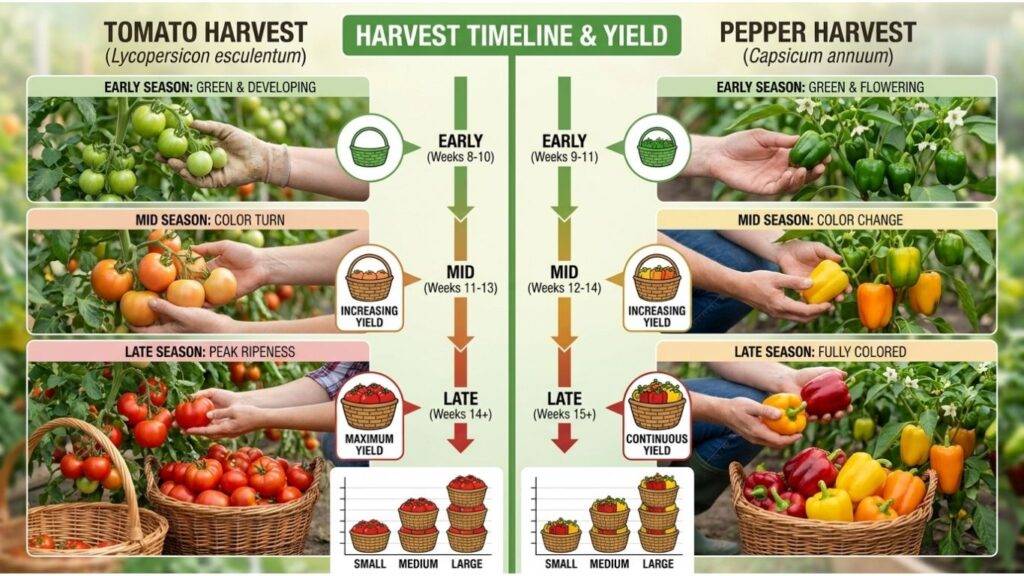
Tomatoes generally offer a larger total yield per plant than peppers, especially if you’re growing indeterminate types that produce continuously until frost. A single healthy indeterminate tomato plant can produce 10 to 20 pounds of fruit over a season. Cherry tomato varieties, in particular, are prolific producers that will keep you swimming in tiny, sweet fruit from midsummer through fall. The harvest window for indeterminate tomatoes is wonderfully long, sometimes stretching over three months.
Determinate tomato varieties produce their crop in a more concentrated burst—great for canning or making sauce, but the harvest window is shorter (usually two to three weeks of peak production).
Peppers typically produce fewer total pounds per plant, but they offer a long harvest window of their own. A healthy bell pepper plant might give you 5 to 10 peppers over the course of a season. If you pick them green, you’ll get more total fruit because the plant puts its energy into producing new peppers rather than ripening the existing ones. If you wait for full color—red, yellow, orange, or other colored bells—you’ll get fewer but sweeter peppers.
For sheer volume of food produced per square foot of garden space, tomatoes usually win. But peppers offer a more manageable, steady trickle of harvest that some beginners find less stressful to keep up with.
Dealing with Weather Challenges
Weather can make or break a growing season, and beginners need crops that can handle some unpredictability.
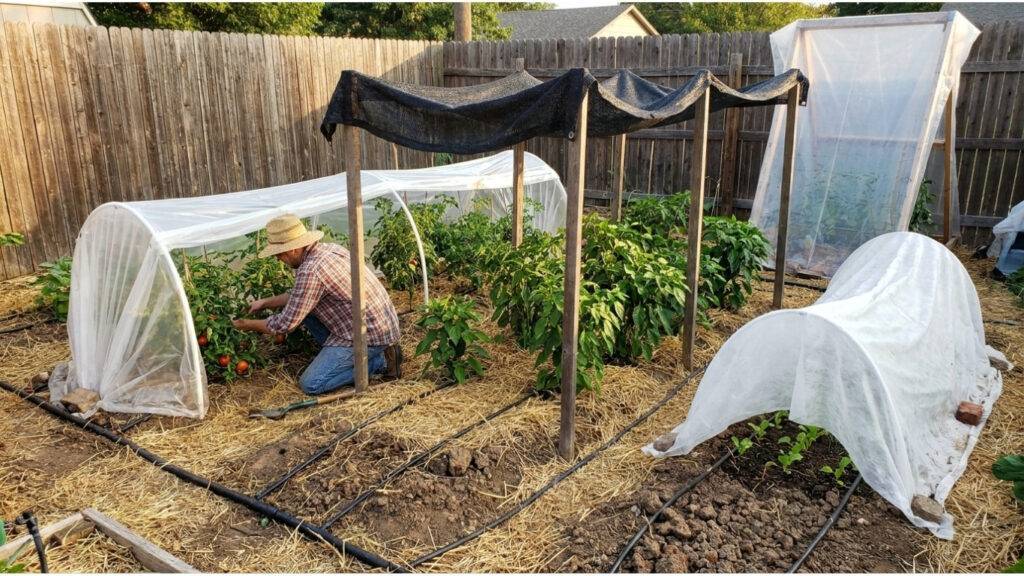
Tomatoes are sensitive to both ends of the temperature spectrum. Frost kills them, extreme heat stops fruit set, and prolonged wet weather invites blight. They’re also prone to sunscald—a condition where direct, intense sunlight bleaches and damages the fruit skin—if too much foliage is removed or if the plant loses leaves to disease. The fruit needs some leaf cover for protection, but a too-dense canopy traps moisture and breeds fungal problems. It’s a balancing act.
Peppers handle heat better and are slightly more drought-tolerant, but they’re equally frost-sensitive. They also ripen more slowly in cool, overcast weather, which can be frustrating in regions with shorter summers. However, because pepper plants are more compact and their fruit is more durable, they tend to weather storms and wind better than tall, top-heavy tomato plants.
Overall, peppers edge ahead for weather resilience in warm climates, while tomatoes may perform better in moderate climates with adequate rainfall.
Profitability and Market Value
If you’re thinking about growing for a local farmers’ market or even to save money on groceries, it’s worth noting the economic angle. Both tomato and pepper crops can be highly profitable on a small scale. Heirloom tomatoes and specialty colored bells command premium prices at markets. Cherry tomatoes are always popular, and unique pepper varieties—especially organic ones—sell well.
From a pure agriculture standpoint, both crops have strong commercial potential. However, tomatoes generally produce more total volume, which can translate to higher overall revenue if you have the space and time to manage them.
The Verdict: Which Is Better for Beginners?
After weighing all these factors, here’s the honest answer: peppers are slightly easier for most beginners, while tomatoes are slightly more rewarding.
Peppers win on simplicity. They’re more compact, need less support, require less pruning, face fewer disease threats, handle heat and brief drought better, and are generally more forgiving of beginner mistakes. If you want a crop that will produce reliably without demanding too much of your time and attention, a few bell pepper plants are an excellent starting point.
Tomatoes win on productivity and excitement. There’s nothing quite like picking a ripe, sun-warmed tomato from your own vine. The variety available is staggering—from tiny cherry types to massive beefsteaks, in every color of the rainbow. They produce more food per plant, offer a longer harvest window (with indeterminate types), and serve as a fantastic introduction to more advanced gardening skills, such as pruning, staking, and disease management.
The Best Approach? Grow Both.
Here’s the thing—tomato and pepper plants have nearly identical growing requirements. They want the same sunlight, similar soil, comparable fertilizer schedules, and the same frost-free growing season. If you can grow one successfully, you can almost certainly grow the other. So why choose?
If you have room for even a small raised bed or a few large containers, consider planting two or three tomato plants alongside two or three pepper plants. You’ll learn the nuances of each crop, enjoy a diverse harvest, and discover which one you personally find more satisfying to grow.
Start with a determinate tomato variety (for its manageable size) and a sweet bell cultivar (for its reliability), and you’ll set yourself up for a successful and enjoyable first season in the garden. As you gain confidence, you can branch out into indeterminate types, hot peppers, heirloom tomatoes, and all the other exciting options that await.
The most important thing isn’t which seed you plant first—it’s that you plant something at all. Both of these crops will teach you valuable lessons about soil, water, sunlight, and the deeply satisfying rhythm of growing your own food. So pick up a few transplants this spring, give them a sunny spot, keep them watered, and enjoy the harvest that follows. Your future gardener self will thank you.