
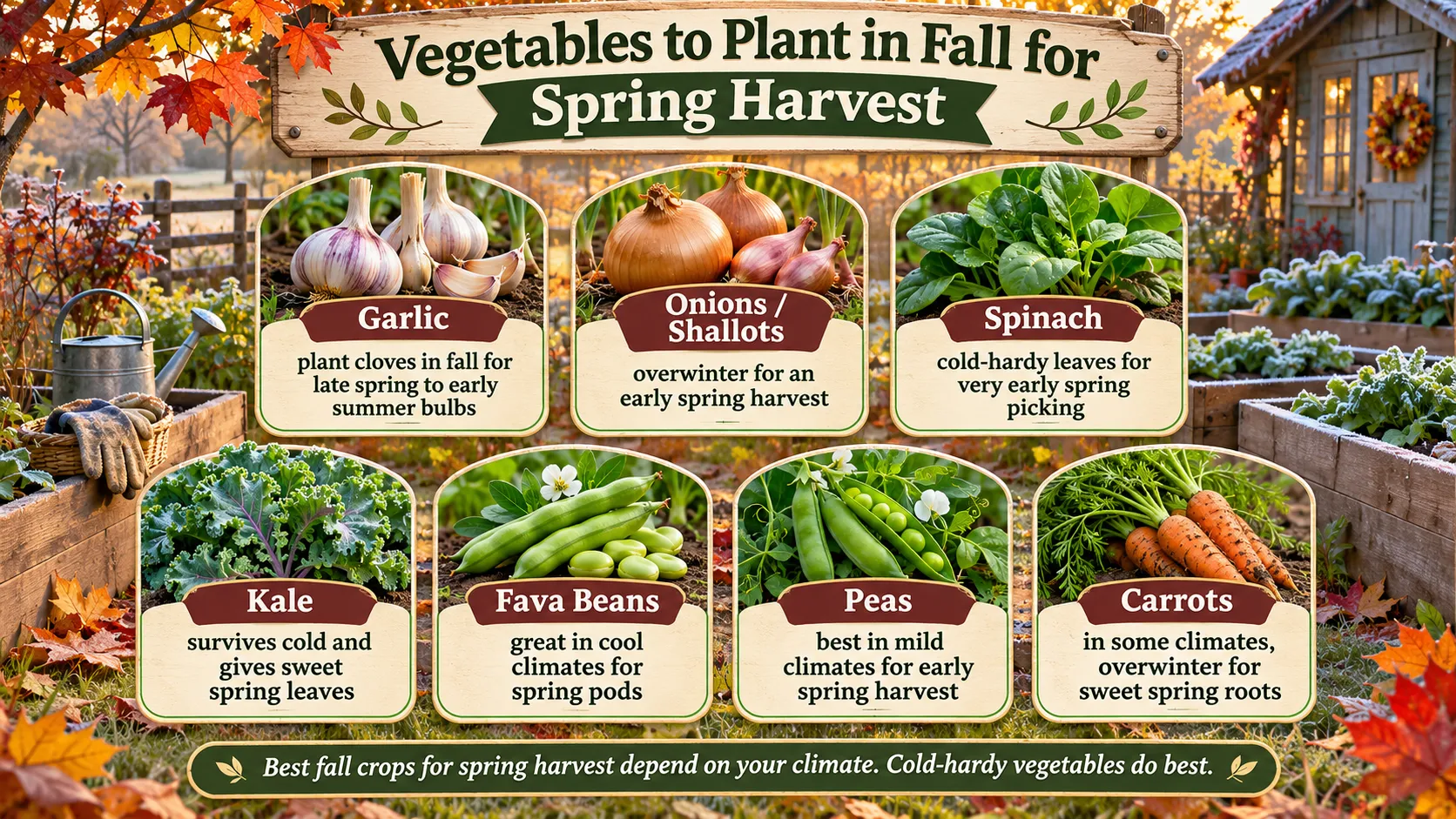
Once the tomatoes are finished, it’s tempting to let the garden sit empty until spring. That’s a missed chance. Several cold-hardy crops can go in the ground in fall, sit quietly through winter, and give you food in early spring, often weeks before spring-planted crops are ready.
So, what vegetables should you plant in fall for a spring harvest? The most reliable choices are spinach, kale, carrots, parsnips, onions, and, in milder areas, fava beans. Garlic goes in now too, though it’s ready a little later, in early summer. Which crops work for you depends on how cold your winters get and when you plant.
Here’s what to plant, when to plant it, and how to help it survive the cold.
How Fall Planting for Spring Harvest Works
Nebraska Extension describes two reasons to plant in fall. One is to harvest in late fall or winter. The other is to plant cold-hardy crops that live through winter and produce in spring. This guide focuses on the second.
Day length is what makes this work. Once days get shorter than about 10 hours, plant growth mostly stops. Extension educators call this the Persephone period. Your plants don’t need to be full-sized before then, but they do need to be well rooted.
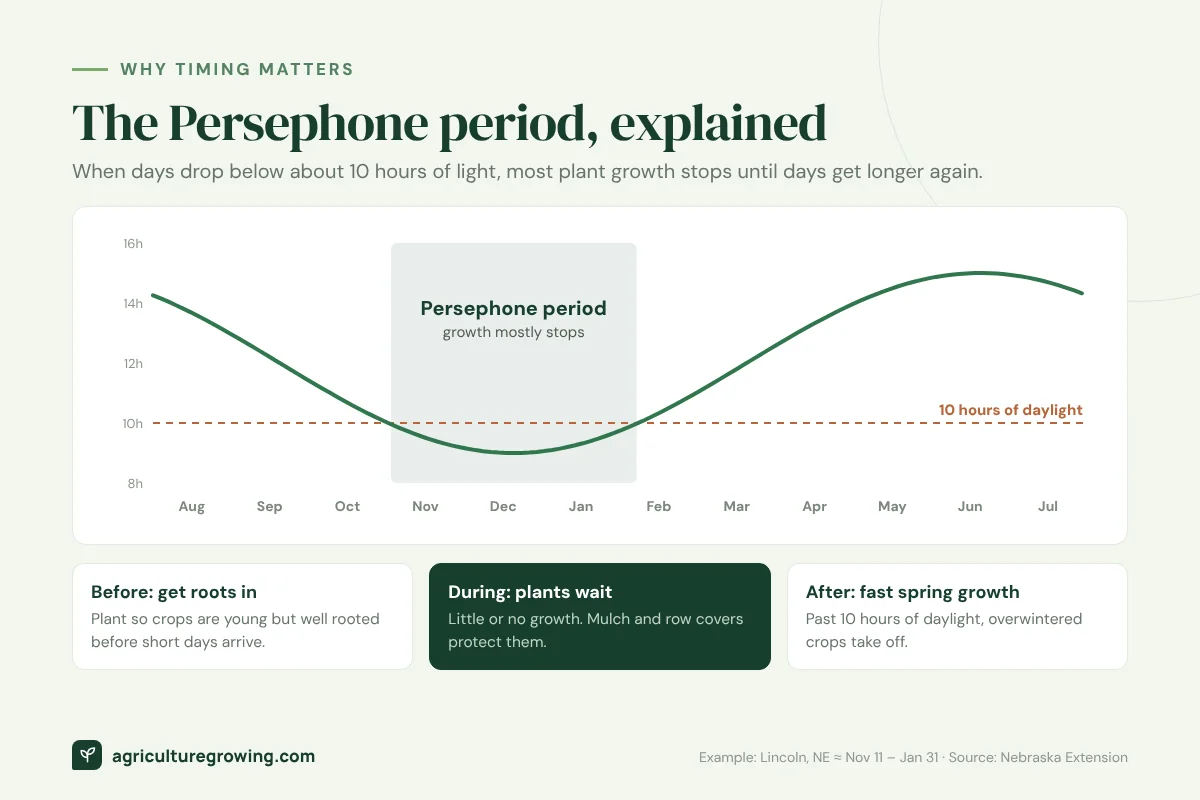
That’s why timing matters so much. Plant too late, and small seedlings can’t survive the cold. Plant too early, and crops like garlic can put on soft top growth that winter damages. The aim is a young, sturdy plant that waits out the dark months and takes off when the days get longer.
The Best Vegetables to Plant in Fall for a Spring Harvest
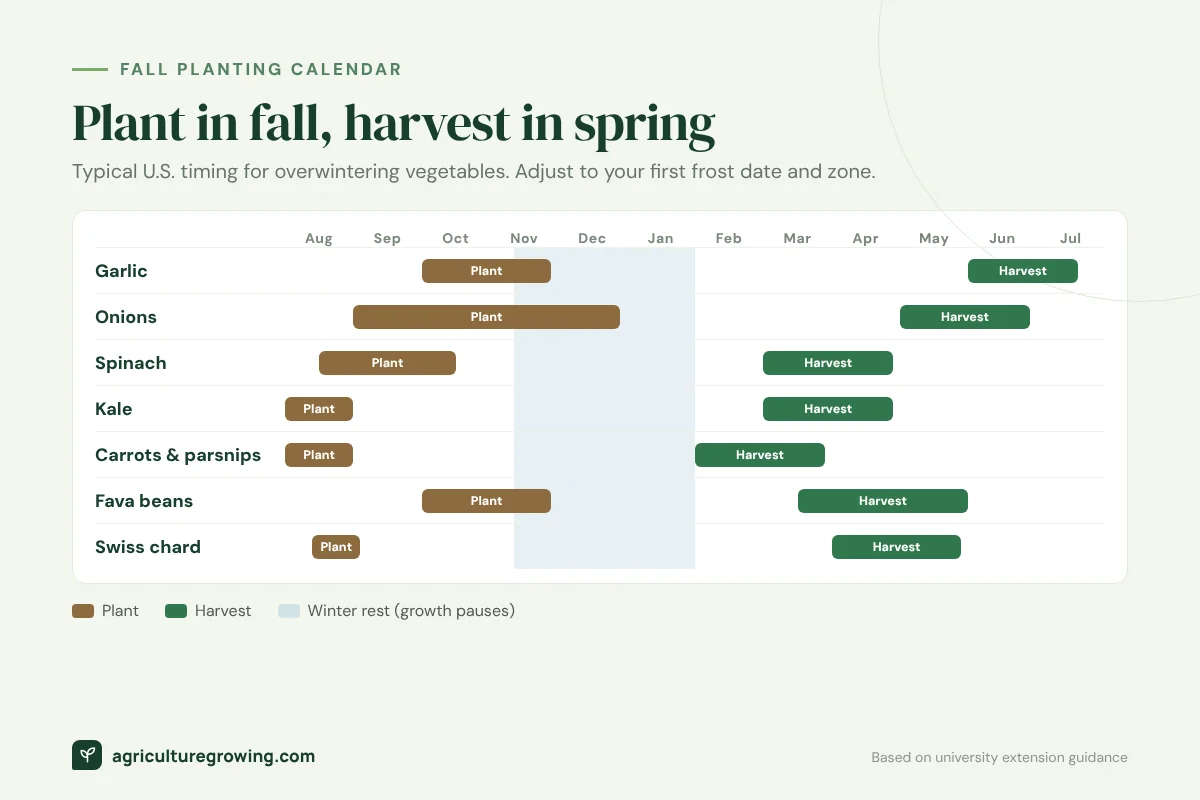
| Vegetable | When to plant | When you’ll harvest | Best suited for |
|---|---|---|---|
| Garlic | Fall, a few weeks before the ground freezes | Early to midsummer | Most of the U.S. |
| Onions | Fall (sets or seed) | Late spring to early summer | South; overwintering varieties farther north |
| Spinach | Late summer to fall | Early spring | Most areas, with protection in cold zones |
| Kale | Late summer | Early spring | Most areas |
| Carrots and parsnips | Late summer | Late winter to early spring | Most areas, with heavy mulch |
| Fava beans | Fall | Spring | Mild-winter areas, such as the Pacific Coast and parts of the South |
| Swiss chard | Late summer | Spring | Mild areas |
Garlic
Garlic is the classic fall-planted crop. UMass Extension explains that garlic needs a cold period to form bulbs, which is why it goes in the ground in fall.
Garlic is the slow one on this list. University of Maryland Extension lists 250 to 270 days to maturity for fall-planted garlic, so harvest usually comes in early summer, not early spring. Fall is still the right time to plant, though. Iowa State Extension notes that late spring planting gives smaller bulbs.
How to plant it:
- Break the bulb into cloves and choose the biggest ones.
- Plant each clove pointed end up, at least 2 inches deep. Penn State Extension suggests 4 to 8 inches between plants.
- Cover the bed with about 4 inches of straw or shredded leaves.
Ohio State Extension advises using clean straw, not hay, because hay often carries weed seeds. Ideally, the first leaves should poke through before hard freezes arrive. Planting much earlier than that can produce extra top growth that gets hurt in winter.
Onions
Onions are a little trickier because they bulb in response to day length. Varieties are sold as short-day, intermediate-day, or long-day.
In the South, fall is the main onion season. University of Florida IFAS recommends planting short-day onions from September through December in Florida. In eastern North Carolina, NC State Extension notes that short-day onions are usually harvested in May and June.
Farther north, standard long-day onions are normally planted in spring. NC State Extension notes that breeders have developed intermediate- and long-day varieties that survive winter well, though. If you want to try fall onions in a colder area, look for seed or sets labeled for overwintering.
Spinach
Spinach is one of the hardiest leafy greens you can grow. University of Maryland Extension says that in mild areas, spinach sown in late fall will overwinter and start growing again in spring.
Fall-sown spinach also gets around a common spring problem. Spinach tends to bolt, or go to seed, once spring weather warms up. Plants that already have roots in place by late winter give you an earlier harvest before that happens.
Earlier fall planting can pay off. In on-farm trials by Practical Farmers of Iowa, one farm that seeded earlier got a bigger yield and an earlier spring harvest. For the best chance, choose a variety the seed packet describes as winter-hardy.
Kale and Other Leafy Greens
Kale is another dependable choice. Virginia Cooperative Extension lists kale, spinach, lettuce, parsley, and evergreen bunching onions among the crops that may survive all winter in the garden.
Lettuce is the least hardy of that group. In colder areas, it usually needs a cold frame or row cover to make it through.
Carrots, Parsnips, and Other Root Crops
Carrots, parsnips, and salsify are on Virginia Extension’s list of vegetables that can stay in the ground over winter. Sow them in late summer so the roots are well formed before growth stops.
Don’t wait too long in spring, though. Territorial Seed Company notes that most overwintered root crops will bolt when the weather warms and days get longer. Plan to dig them all by early spring.
Fava Beans
Fava beans, also called broad beans, are a great choice if your winters are mild. They can handle temperatures down to about 15°F, according to Fine Gardening, which makes them suitable for overwintering along the Pacific Coast and in parts of the South.
UC Master Gardeners in Santa Clara County say fall-planted favas usually start producing in early spring. Washington State University Extension suggests planting them in the second week of November in western Washington for a June harvest. UC Master Gardeners in Sonoma County recommend sowing seeds 1 to 2 inches deep and 6 to 8 inches apart.
In places with hard, cold winters, plant favas in early spring instead.
Swiss Chard and Overwintering Broccoli
WSU Extension notes that chard planted in late August can survive winter in western Washington and produce earlier than a spring planting.
Some broccoli varieties are also bred to overwinter. NC State Extension staff have tested an overwintering sprouting broccoli that’s planted in late summer or early fall and harvested over about three weeks in early spring. Look for “overwintering” in the variety description.
When to Plant: Working Back From Your First Frost
Start with your average first fall frost date. Your county extension office can give you a reliable date.
Virginia Cooperative Extension suggests counting backward from that date. Add up the days to maturity on the seed packet, the expected harvest period, and a “fall factor” of about two weeks. That extra time covers the slower growth that comes with cooler weather and shorter days.
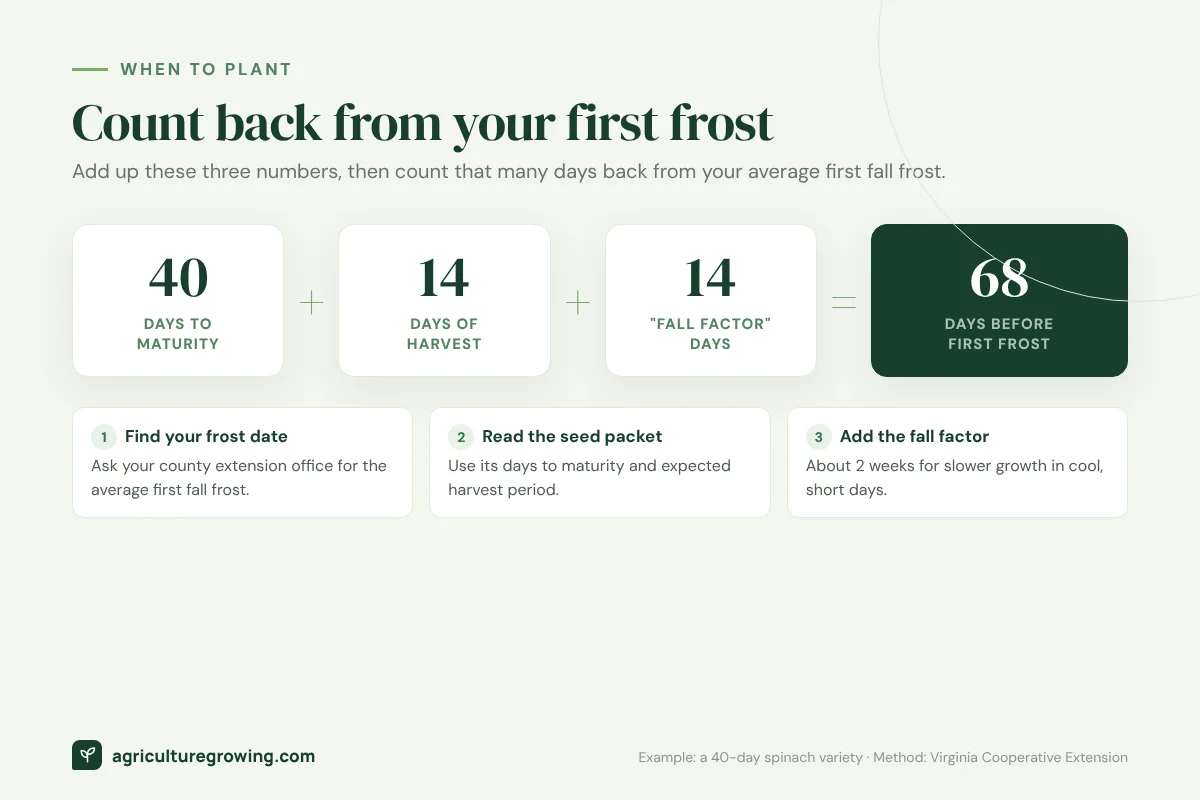
For overwintering crops, you’re aiming for plants that are established but not fully mature when winter arrives. In general:
- Leafy greens and root crops: sow in late summer to early fall
- Garlic: plant a few weeks before the ground freezes
- Fava beans and onions in mild areas: fall into early winter
Preparing the Soil
Spring and summer crops pull nutrients out of the soil. Before fall planting, Virginia Extension recommends adding a light layer of compost or aged manure. Avoid fresh manure, which can burn young seedlings.
Late-summer soil is often dry, which makes seeds slow to sprout. Plant after a good rain, or water the area well the day before. Virginia Extension also suggests sowing seeds about twice as deep in fall as you would in spring, since the deeper soil stays moister.
Drainage matters, too. Roots sitting in cold, soggy soil all winter are more likely to rot. If your ground stays wet, a raised bed is a simple fix.
Protecting Crops Through Winter
For hardy crops, cold itself is often less of a problem than freezing and thawing, drying winds, and soggy soil.
Mulch
Mulch keeps soil temperatures steadier. Virginia Extension recommends about 8 inches of mulch over overwintering vegetables to keep the soil from heaving, which is when freezing and thawing pushes plants up out of the ground. Straw and shredded leaves both work well. Just don’t pile leaves too thickly, because they can mat down into a soggy layer.
Row Covers and Cold Frames
A floating row cover is a lightweight fabric laid over plants. It traps a little heat and blocks wind. A cold frame is a bottomless box with a clear top, often made from old windows. University of Maryland Extension recommends both for protecting fall crops and stretching the harvest.
They’re most useful for spinach and lettuce in cold areas.
Give Plants a Little Extra Room
Territorial Seed Company recommends spacing overwintering crops a bit wider than usual. Better airflow helps the soil dry out and discourages disease during long, damp stretches.
Caring for Your Crops in Spring
Once days stretch past that 10-hour mark again, overwintered plants start growing quickly. A little attention now pays off:
- Pull back heavy mulch once the worst cold has passed. Iowa State Extension suggests moving garlic straw between the rows in early spring so the leaves can come through. Leaving it there also helps control weeds.
- Harvest greens often. Pick outer leaves of spinach and kale regularly before warm weather pushes them to bolt.
- Dig root crops early. Harvest carrots and parsnips before they start flowering.
- Water during dry spells. Utah State University Extension notes that drought stress shrinks garlic bulbs, so keep the soil evenly moist as they grow.
Common Mistakes to Avoid
- Planting the wrong onion type. A long-day onion planted in fall in the South won’t form a proper bulb.
- Using hay as mulch. It can fill your bed with weeds.
- Planting garlic too shallow. Cornell Small Farms warns that drying winter wind can damage garlic cloves near the surface.
- Leaving root crops too long. Once they bolt in spring, they’re past their best.
- Ignoring your zone. A crop that overwinters easily in Oregon may need heavy protection in Minnesota, or may not survive at all.
Frequently Asked Questions
What is the easiest vegetable to plant in fall for spring?
For a true spring harvest, spinach and kale are the easiest, especially in areas with moderate winters or with a row cover for protection. Garlic is even simpler to grow. You plant the cloves once and mulch them, but you’ll harvest in early summer.
Can I plant vegetables in fall if I live in a cold climate?
Yes, but choose carefully. Garlic does well in cold regions with good mulch. Spinach and kale can often survive under row covers or in a cold frame. Fava beans and fall onions are better suited to milder winters.
Do fall-planted vegetables need water in winter?
Usually very little. Water well at planting and during dry fall weeks so roots get established. Once the soil freezes, plants are mostly dormant. In mild climates without winter rain, water occasionally when the soil feels dry.
Will fall-planted vegetables survive snow?
Snow can actually help. A layer of snow insulates the soil and protects plants from bitter wind. The bigger danger comes from repeated freezing and thawing, which is why a thick layer of mulch matters.
Final Thoughts
Fall planting takes a little faith, since you won’t see much happening for months. The payoff is fresh spinach, kale, and early fava beans at a time when most gardens are still bare, with garlic following soon after. Start with one or two crops that suit your winters, like garlic and spinach, and see how they do. Look up your first frost date, prepare the bed with compost, and keep mulch on hand. By next fall, you’ll have a much better sense of what your garden can handle.