
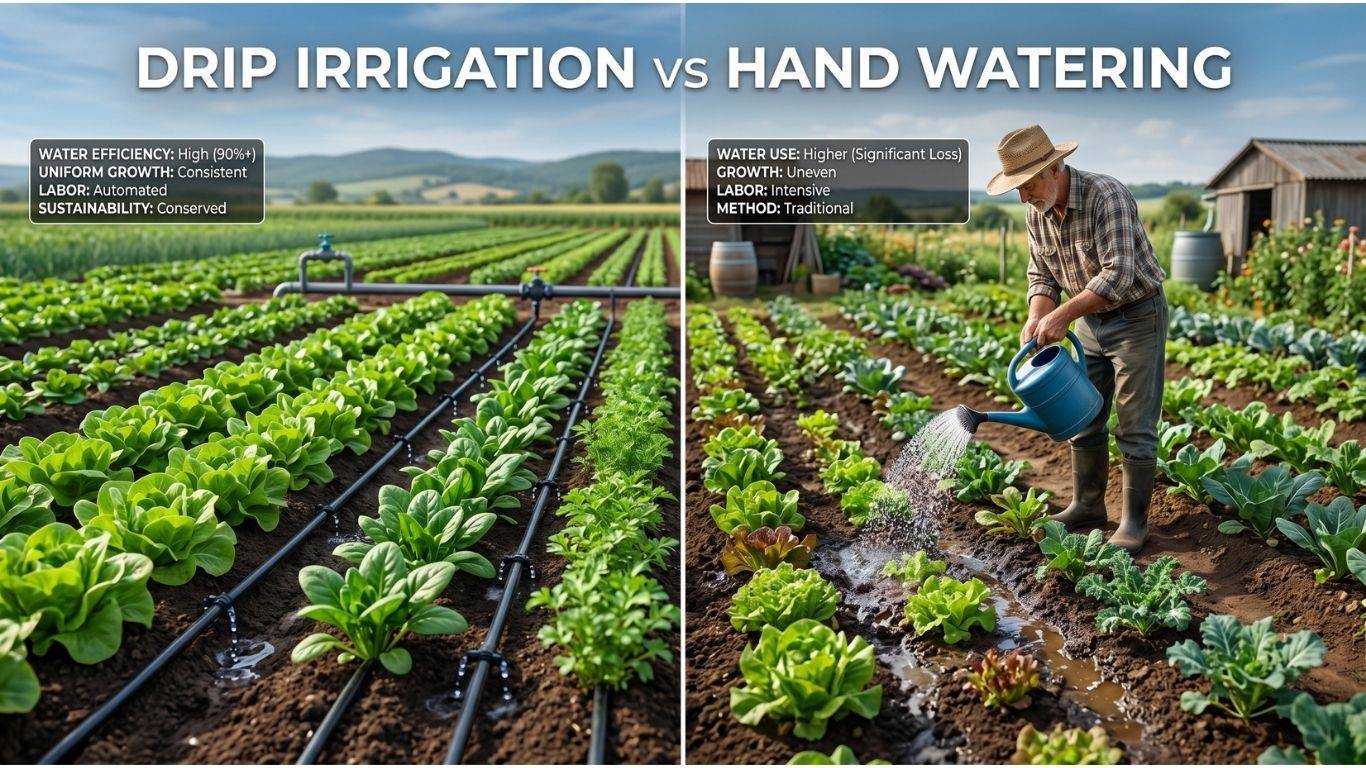
If you’ve ever spent a hot summer evening standing in your garden with a hose, watching the clock tick by, you’ve probably asked yourself: Is there a better way to do this? The short answer is yes — but the long answer depends on your garden, your budget, and how you like to spend your weekends. The debate between drip irrigation and hand watering isn’t new, but it’s one worth settling once and for all. So let’s break it down, side by side, and figure out which method truly saves you the most time.
What Exactly Is Drip Irrigation?
A drip irrigation system is a positively efficient watering method that uses a network of tubing, fittings, and drip emitters to deliver water directly to the soil near each plant’s base. Unlike sprinkler systems that sprinkle water over a broad area, a drip system delivers water slowly and steadily right where your garden plants need it most—the root zone.
The way it works is straightforward. A main line connects to your water source, whether that’s a spigot, rain barrel, or dedicated irrigation hookup. From there, drip tubing or drip lines branch off to each planting area. Small drip emitters at intervals along these lines release water at a controlled rate, typically measured in gallons per hour. Most emitters put out somewhere between 0.5 and 2 gallons per hour, which means the system delivers a gentle, steady trickle — hence the alternate name, trickle irrigation.
Because the system can be paired with a timer, you can set a watering schedule and walk away. The timer controls when and for how long water flows, so your garden drip irrigation system runs on autopilot. That alone is a massive time-saver for any busy gardener.
What Does Hand Watering Involve?
Hand watering is exactly what it sounds like: you grab a hose or watering can, head outside, and water your plants one by one. It’s the most basic form of garden watering, and it’s how most people start. You stand there, aim the hose nozzle at the base of each plant, and try to give each one the right amount of water before moving on to the next.
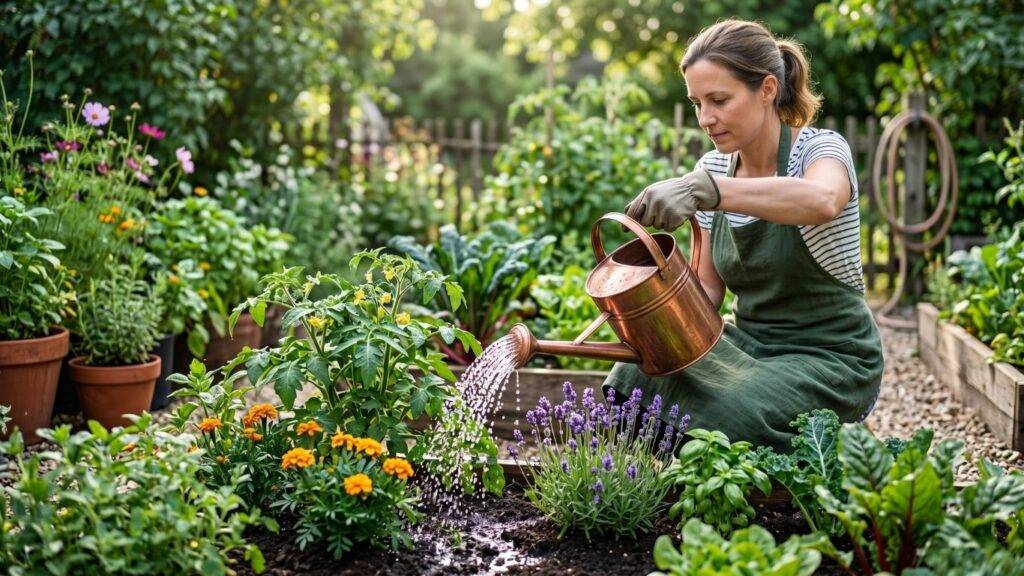
This method gives you complete control. You decide how much water each plant gets, and you can adjust on the fly. If your tomato looks a little wilted, you can give it extra water. If your shrub by the fence still looks happy, you skip it. For many people, this hands-on approach is part of the joy of gardening — it’s a chance to inspect your plants up close and stay connected to what’s growing.
However, there’s a catch. Hand-watering is slow. Depending on the size of your garden, you could easily spend 30 minutes or more every day just trying to keep your plants hydrated. Over the course of a season, that adds up to hundreds of hours with a hose in your hand.
Time Savings: Where Drip Irrigation Pulls Ahead
Here’s where the rubber meets the road. When we talk about saving time, drip irrigation wins by a wide margin — and it’s not even close.
Once you’ve finished installing a drip system, the daily time commitment drops to nearly zero. A properly designed system with a timer handles everything automatically. You don’t need to drag a hose around. You don’t need to stand outside in the heat. And You don’t even need to remember that today is watering day. The system runs on its own, following the watering schedule you’ve programmed.
By contrast, hand watering requires your physical presence every single session. For a modest vegetable garden or a few flower beds, that might mean 20 to 30 minutes per day. But if you have a larger property with multiple watering zones, potted plants on the patio, a raised bed or two, and some shrubs along the border, you could easily be looking at an hour or more each time you go out to water by hand.
Let’s put some rough numbers on it. Over a 120-day growing season, a gardener who waters by hand for 30 minutes daily will spend about 60 hours on watering alone. That’s a full week and a half of your life, devoted to holding a hose. A drip irrigation system, on the other hand, asks for maybe 2 to 4 hours of setup time at the start of the season — plus occasional check-ins throughout the year. Even if you add a few hours for maintenance and adjustments, you’re still saving well over 50 hours per season. For anyone juggling work, family, and a dozen other commitments, that time savings is real and meaningful.
Water Efficiency: An Added Bonus of Going Drip
Time isn’t the only thing you save. One of the biggest advantages of drip irrigation is the remarkable water conservation and efficiency it offers.
Traditional watering methods — including hand watering and sprinkler use — tend to waste a significant amount of water. When you spray water across a broad area with a sprinkler, a large percentage evaporates before it ever reaches the plant roots. Wind carries droplets away from your garden, and water lands on sidewalks, driveways, and areas between plants where it does no good. Studies suggest that sprinkler systems operate at only 50 to 70 percent efficiency, meaning up to half the water you use never actually benefits your plants.
Hand watering can be more targeted, sure, but it still leads to significant water waste if you’re not extremely careful. Most people tend to overwater some plants and underwater others, resulting in uneven watering across the garden. And if you’re in a hurry — which, let’s be honest, happens often — you’re likely to splash water on leaves and surrounding soil rather than directing it precisely to the root zone.
A well-designed drip irrigation system, by comparison, operates at 90 to 95 percent efficiency. Because it delivers water directly to the root area through drip emitters and drip lines, there’s very little water loss from evaporation, wind, or runoff. This precise watering approach means your plants get exactly the water they need, right where they need it, without any water wastage on paths, mulch, or empty stretches of soil.
The result? You reduce water consumption dramatically — some estimates suggest up to 60 percent compared to traditional irrigation methods. That translates directly into lower water bills, making a drip system less expensive in the long run despite the higher upfront cost.
The Setup: How Much Effort Does It Really Take?
One of the most common objections to drip irrigation is the initial setup. And yes, installing a drip system does take more effort than simply screwing a nozzle onto a hose. But here’s the thing: it’s a one-time investment of effort that pays off every single day afterward.
A typical drip irrigation kit or watering kit includes everything you need to get started: mainline tubing, emitters, connectors, stakes, a filter, a pressure regulator, and often a timer. For a small vegetable garden or raised bed, you can set up a basic system in an afternoon. Larger installations with multiple watering zones may take a full weekend. Either way, you plan your system once, install it, and then enjoy months — or even years — of automated watering.
To plan your system effectively, start by mapping out your planting areas. Identify which plants have similar water needs and group them. Then lay out your drip tubing so that drip emitters are positioned near the base of each plant. Connect everything to the water source, set the timer, and you’re done.
Hand watering, while simpler to start, never gets easier. It’s the same amount of effort on day one as it is on day one hundred. There’s no shortcut, no automation, and no way around the fact that you have to be there to water your garden each time physically.
Plant Health and Weed Control
There’s another time-related benefit to drip irrigation that often goes overlooked: healthier plants and fewer weeds.
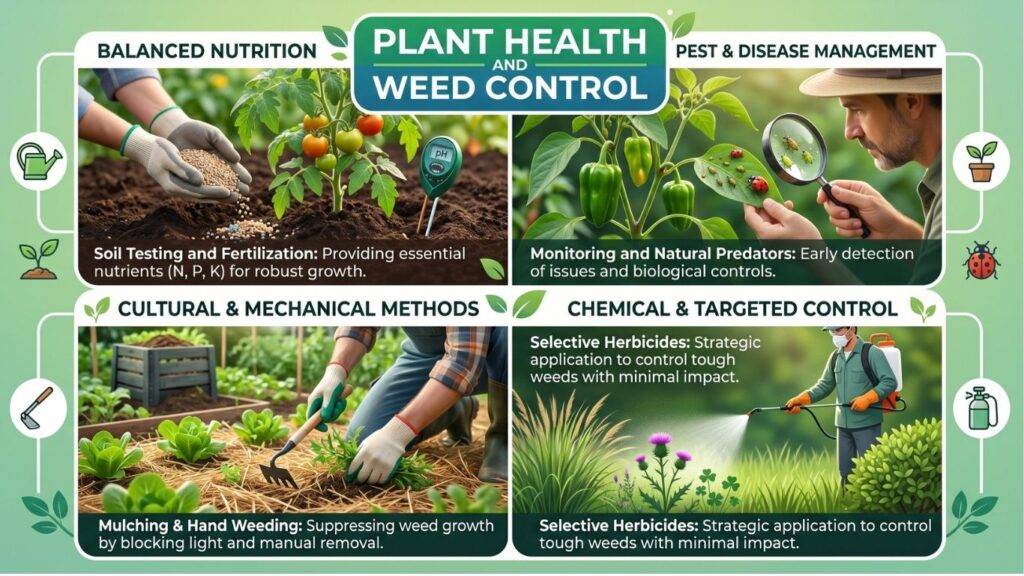
Because a drip system delivers water directly to the base of plants, the foliage stays dry. Wet leaves are a breeding ground for fungal diseases, so keeping them dry means fewer problems — and less time spent treating sick plants. This is especially important in humid climates where disease pressure is already high.
At the same time, because drip watering targets only the plant roots and doesn’t soak the areas between plants, you’ll notice significantly less weed growth. Weeds need water just like your crops do, and when you use a sprinkler or even a soaker hose that dampens a broad swath of ground, you’re effectively watering weeds too. With drip irrigation, the soil between your rows stays dry, which discourages weed seeds from germinating. Less weeding means even more time saved — a welcome bonus on top of the watering time you’ve already reclaimed.
When Hand Watering Still Makes Sense
Despite all the advantages of drip irrigation, there are situations where hand watering still holds its own.
If you have a very small garden — say, a handful of potted plants on a balcony or a tiny herb bed by the kitchen door — the time difference between drip and hand watering is minimal. Setting up a full drip system for six pots might feel like overkill, and the cost of the equipment might not be justified.
Hand watering also shines when you’re dealing with irregular layouts, constantly changing plant arrangements, or new transplants that need watering at unpredictable intervals. A gardener who likes to rearrange their flower beds every few weeks may find a permanent drip system more hassle than it’s worth.
There’s also the therapeutic angle. Some people genuinely enjoy the ritual of watering plants by hand. The quiet time in the garden, the sound of water flowing, the chance to closely observe each plant — it’s meditative for many. If garden watering is your form of relaxation, then the time “spent” isn’t really lost at all.
Cost Comparison: Short-Term vs Long-Term
Let’s talk money, because it’s closely tied to the time question.
A basic hose-and-nozzle setup for hand watering costs very little upfront — maybe $20 to $50. A soaker hose or soaker system runs slightly more, perhaps $30 to $80 for a modest setup. A drip irrigation kit for a home garden, on the other hand, typically costs between $50 and $200 for a small-to-medium installation. Larger systems with multiple watering zones and high-quality drip emitters can run $300 to $800 or more.
However, when you factor in water usage over time, the equation shifts. Because a drip system uses less water — often 30 to 60 percent less — you’ll see lower water costs each month. Over a couple of growing seasons, those savings on your water bill add up. Combined with the time savings, which has its own dollar value (your time is worth something, after all), drip irrigation is clearly less expensive in the long run.
There’s also the question of water conservation on a broader scale. In drought-prone regions, efficient water use isn’t just a nice-to-have — it’s a necessity. Choosing the right irrigation method helps you conserve water for your community while still keeping a thriving garden.
The Soaker Hose: A Middle Ground?
A soaker hose sits somewhere between hand watering and a full drip irrigation system. It’s essentially a porous hose you lay along your garden beds, and it slowly seeps water along its entire length. It’s affordable, easy to set up, and does a decent job of getting water to plant roots without the overhead spray of a sprinkler.
That said, a soaker hose isn’t as precise as a true drip system. It uniformly waters everything along its length, including areas between plants that don’t need moisture. This can contribute to weed growth and some water waste, though it’s still better than a sprinkler in terms of evaporation and water loss.
In terms of time savings, a soaker hose beats hand watering since you can connect it to a timer and let it run. But it doesn’t match a well-designed drip system with properly spaced emitters for efficient water use and overall effectiveness.
So, Which One Saves More Time?
The answer is clear: drip irrigation saves much more time than hand watering. After the initial setup, a drip irrigation system with a timer requires almost no daily effort to water your garden. It handles the watering schedule for you, delivers the right amount of water to each plant, and frees you up to do everything else you’d rather be doing.
Hand watering will always demand your personal time — session after session, day after day, season after season. While it gives you control and keeps you close to your plants, it’s simply not the best choice for anyone looking to minimize the time they spend watering the garden.
If you want to keep your plants hydrated without sacrificing your free time, investing in the right watering setup is worth every penny. A drip irrigation system lets you water directly to the soil, deliver water directly to each plant’s root zone, and apply water with a precision that no hose or sprinkler can match. It supports water conservation, reduces your water bill, helps prevent weed growth, and lets you barely think about watering your yard.
For the modern gardener who values both a beautiful garden and their personal time, drip watering is the smarter choice. Set it up once, plan your system well, and let the drip do the work while you enjoy the results. Your plants — and your schedule — will thank you.
FAQ
What is the 30/30 rule for drip irrigation?
Drip Irrigation Emitters Maintenance Guide | Sprinkler Warehouse. The 30/30 rule for drip irrigation is a common gardening guideline used to prevent friction loss and ensure even water pressure across your system. It states that ” micro-tubing (or spaghetti tubing) should not exceed 30 feet in length and must not exceed a flow rate of 30 gallons per hour (GPH) per single run.
Is drip irrigation better than hand watering?
Hand watering offers excellent control for individual plant needs but requires significant time and daily effort. Drip irrigation automates the process and conserves water by delivering slow, precise moisture directly to the root zone, reducing evaporation and the risk of fungal diseases.
What is the most efficient watering system?
Drip irrigation is the most efficient watering system available. Delivering water directly to the plant’s root zone through a network of valves, pipes, and tubing, it achieves up to 90% water efficiency. It minimizes waste by virtually eliminating evaporation, runoff, and water lost to weeds.