
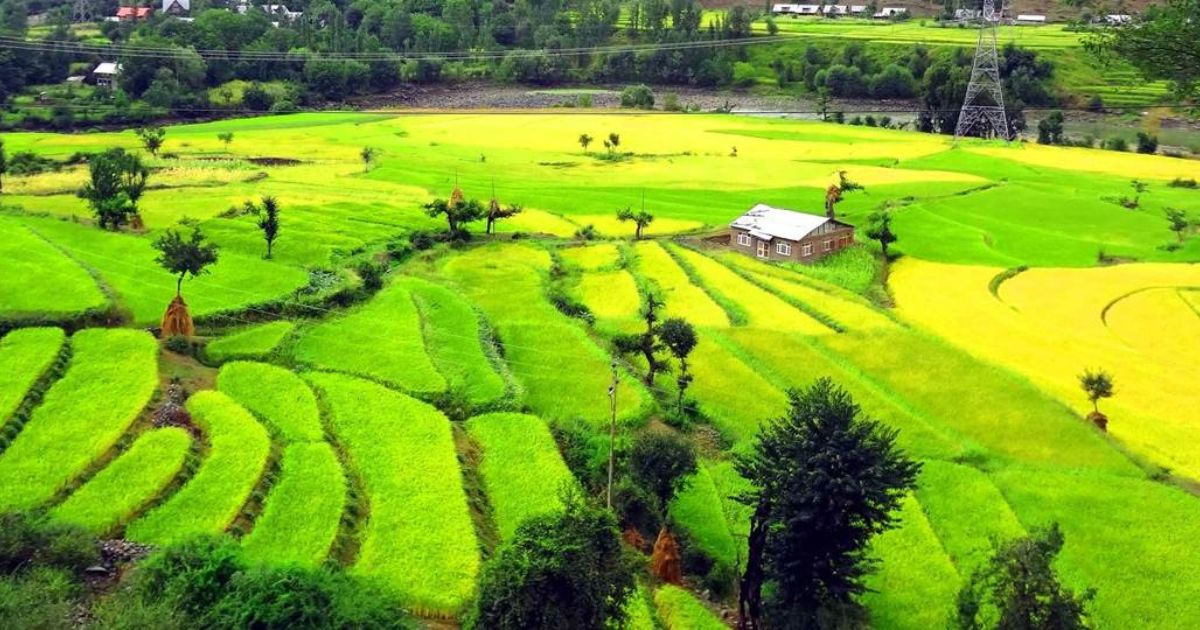
One of the earliest and most successful agricultural methods is terrace farming a technique used worldwide. For thousands of years, people in Asia, Africa, and South America have used this farming method to grow crops on steep hillsides and mountainous regions where conventional farming would be impossible. From the famous rice terraces of the Philippines to the ancient stone terraces of the Andes, terrace farming stands as a powerful example of how human innovation can harmonize with terrace nature.
In today’s world, where climate change, soil erosion, and food insecurity are increasing threats, terrace farming is more important than ever. This article explores why terrace farming is essential, how it works, and how it contributes to sustainable agriculture, environmental protection, and rural livelihoods.
What Is Terrace Farming?
Terrace farming is an agricultural practice used on hilly or mountainous land where crops are grown on a series of step-like platforms cut into the slope. These flat terraces reduce soil erosion, slow water runoff, and help retain moisture, making farming possible in areas that would otherwise be too steep to cultivate. By transforming slopes into stable, level fields, terrace farming improves water management and prevents fertile topsoil from being washed away during heavy rains.
This method has been used for centuries in regions such as South and Southeast Asia, the Andes, and parts of Africa. Common crops grown using terrace farming include rice, tea, potatoes, and maize, supporting sustainable food production in challenging farm landscapes.
Why Is Terrace Farming Important?
 Terrace farming is important because it allows crops to be grown on hilly and mountainous land where flat agriculture is impossible. By cutting the land into step-like platforms, terraces slow down water runoff, prevent soil erosion, and reduce the risk of landslides. This helps keep fertile topsoil in place and improves moisture retention, making farming more productive and sustainable.
Terrace farming also supports food production in densely populated regions with limited flat land, helping farmers make better use of natural landscapes. In addition, terraces improve irrigation control, reduce flooding in lower areas, and protect the environment. Overall, terrace farming plays a vital role in conserving soil, managing water resources, and terrace farming ensuring long-term agricultural prevent soil sustainability.
Prevents Soil Erosion
One of the most critical benefits of terrace farming is its role in preventing soil erosion. On steep slopes, rainwater flows rapidly downhill, washing away fertile agriculture topsoil. Over time, this erosion can leave land barren and agriculture unproductive.
Terraces slow the movement of water by breaking long slopes into short, level sections. This allows water to soak into the ground instead of carrying soil away. As a result:
- Fertile topsoil is preserved
- Nutrients remain available for crops
- Landslides are reduced
- Long-term land productivity is protected
Without terracing, many mountain farming regions would suffer irreversible soil loss.
Improves Water Conservation and Management
Terrace farming plays a slope significant role in water conservation. Each terrace acts like a small reservoir, allowing rainwater to seep into the ground.
Key water benefits include:
- Reduced surface runoff
- Improved soil moisture retention
- Efficient use of rainfall
- Controlled irrigation between terraces
- Lower flood risk in downstream areas
In rice cultivation, terraces are designed to hold shallow layers of water, creating ideal growing conditions. In drier regions, terraces help farmers store rainfall and protect crops during dry periods.
Expands Cultivable Land
In many parts of the world, especially mountainous countries, flat agricultural land is minimal. Terrace farming allows communities to convert steep, unusable slopes into productive farmland.
This expansion of cultivable land:
- Increases food production
- Reduces pressure to clear forests
- Supports dense rural populations
- Makes agriculture possible in harsh terrain
Terracing has enabled civilizations to thrive in regions where farming would otherwise be impossible.
Enhances Crop Productivity and Food Security
By conserving soil nutrients and moisture, terrace farming creates healthier growing conditions for crops. The controlled environment improves root development and reduces plant stress.
Terraces help:
- Increase crop yields
- Reduce crop failure risk
- Support multiple cropping seasons
- Enable crop diversification
A wide range of crops are frequently grown by farmers, including grains, legumes, vegetables, and fruit trees, across different terrace levels. This diversity improves nutrition and reduces dependence on a single crop.
For subsistence communities, terrace farming is often directly linked to survival and household food security.
Protects the Environment
Terrace farming provides critical environmental benefits beyond its agricultural role.
It helps to:
- Reduce flooding
- Prevent river siltation
- Protect watersheds
- Limit land degradation
- Maintain biodiversity
By stabilizing slopes, terraces reduce sediment flow into rivers, protecting aquatic ecosystems and irrigation systems. Terraced landscapes also support birds, insects, soil organisms, and native plants, creating balanced agro-ecosystems.
Supports Sustainable Agriculture
Terrace farming closely aligns with the principles of sustainable agriculture. It promotes long-term soil health, efficient water use, and ecological balance.
Sustainable features include:
- Reduced need for chemical fertilizers
- Improved organic matter retention
- Natural pest management through crop diversity
- Long-term land stewardship
Terraces also allow farmers to integrate agroforestry, composting, and organic farming techniques, further enhancing sustainability.
Strengthens Rural Livelihoods
Terrace farming is a foundation of rural economies in many hilly regions. It provides employment, supports household food supplies, and generates income through crop sales.
Terraced farms often produce high-value crops such as:
- Rice
- Tea
- Coffee
- Grapes
- Spices
- Vegetables
These crops support local markets, agro-tourism, and export industries. In many regions, famous terrace landscapes have also become tourist attractions, creating additional income opportunities.
Preserves Cultural Heritage and Indigenous Knowledge
Many terraced farming systems represent centuries of indigenous knowledge and cultural heritage. These landscapes reflect a deep understanding of soil behavior, hydrology, climate patterns, and ecological balance.
Famous examples include:
- Banaue Rice Terraces of the Philippines
- Longji Rice Terraces of China
- Andean mountain terraces
- Himalayan hillside farms
Preserving terrace farming protects not only food systems but also cultural identity and traditional agricultural wisdom.
How Terrace Farming Works
 Terrace farming works by cutting a steep hillside into a series of flat, step-like platforms that soil erosion follow the land’s natural contours. Each “terrace” acts like a small field, slowing down water flow and preventing fertile topsoil from being washed away. Stone, mud, or grass barriers support the edges and retain moisture. Rainwater spreads gently across each level instead of rushing downhill, allowing crops to absorb water more effectively.
This system reduces erosion, improves irrigation control, and makes farming possible on slopes where traditional agriculture would fail. Terrace farming is widely used in hilly and mountainous regions to grow rice, vegetables, tea, and other crops efficiently while protecting the agricultural landscape.
If you want sustainable agriculture more technical, simpler, or SEO-optimized, I can rewrite it.
Common Types of Terraces
- Bench terraces: Wide, flat steps used mainly for rice and vegetables
- Contour terraces: Follow the natural slope lines, standard for grains and orchards
- Broad-base terraces: Suitable for semi-mechanized farming
- Progressive terraces: Developed gradually using soil bunds and vegetation
Each type is adapted to local climate, soil, and crop needs.
Crops Grown on Terraces
Terrace farming allows crops to be grown on stepped land built along hillsides and mountain slopes. These flat platforms reduce soil erosion, conserve water, and make steep terrain productive for agriculture. A wide variety of crops are successfully grown on terraces depending on climate and altitude. Common terrace crops include rice, which thrives in water-retaining terraces, as well as wheat, maize, barley, and millet. In many regions, farmers also grow tea, coffee, grapes, potatoes, beans, and vegetables on terraces.
Fruit trees such as apples, citrus, and peaches are often planted along terrace edges to stabilize soil. By transforming slopes into fertile fields, terrace farming supports food security, protects the prevent soil erosion environment, and sustains traditional agricultural communities worldwide.
Challenges of Terrace Farming
Terrace farming, though highly effective in preventing soil erosion and conserving water on steep slopes, comes with several significant challenges. Building and maintaining terraces requires intensive labor, time, and financial investment, making it difficult for small-scale farmers. Poorly constructed terraces can collapse, leading to landslides and loss of fertile soil. Limited access to modern machinery on narrow terraces increases dependence on manual work, reducing efficiency and productivity.
Irrigation management is also complex, as uneven water distribution can lead to waterlogging in some areas and drought stress in others. Additionally, terrace fields are often located in remote mountainous regions, making transportation of inputs and harvested crops costly and complex. These challenges demand proper planning, technical knowledge, and continuous soil conservation maintenance.
Terrace Farming in a Changing Climate
Climate change has increased rainfall extremes, droughts, and land degradation. Terrace farming helps communities adapt by stabilizing slopes, conserving water, and reducing disaster risks.
Terraces act as natural climate buffers by:
- Controlling runoff
- Improving soil moisture
- Reducing flood damage
- Enhancing ecosystem resilience
As climate threats grow, terrace farming is being recognized as a nature-based solution for sustainable land management.
Types of Terrace Farming
 Terrace farming is practiced on hilly and mountainous land by shaping slopes into flat, step-like platforms that reduce soil erosion and conserve water. There are several main types of terrace farming, each designed for different landscapes and crops. Bench terraces are the most common, forming wide, level steps supported by embankments and used for crops like rice and vegetables.
Contour terraces follow the natural shape of the hillside, slowing water runoff and preventing soil loss. Parallel terraces are evenly spaced and suited for mechanized farming. Broad-base terraces have gentle slopes that allow farm equipment, while narrow-base terraces are steeper and used mainly for manual cultivation. Together, these terrace types improve land productivity and runoff sustainability.
Bench Terraces
Bench Terraces are a form of soil and water conservation structure designed on sloped land. They consist of a series of flat, step-like platforms—”benches”—constructed along the contour of a hill. These terraces reduce soil erosion, improve water retention, and create arable land on otherwise steep terrain. Commonly used in hilly and mountainous regions, bench terraces support sustainable agriculture by preventing nutrient loss, enhancing crop productivity, and making cultivation safer and more efficient on challenging productivity landscapes.
Contour Terraces
Contour terraces are agricultural structures built along the natural contours of sloped land to reduce soil erosion and water runoff. By creating a series of level steps, they slow down rainwater flow, allowing better water absorption and soil retention. This method is especially effective on hilly terrain, promoting sustainable farming. Contour terraces improve crop yield, conserve soil fertility, and prevent land degradation.
Broad-Base Terraces
Broad-base terraces are large, gently sloping embankments constructed on hilly or sloped farmland to reduce soil erosion and conserve water. They feature a broad base that supports heavy rainfall runoff, allowing water to infiltrate the soil slowly while preventing gullying. Widely used in sustainable agriculture, these terraces improve soil fertility, enhance crop yields, and stabilize steep terrain, making farming possible in areas prone to erosion and land topsoil degradation.
Progressive Terraces
Progressive Terraces are innovative agricultural formations designed to maximize arable land on slopes while preventing soil erosion. By creating a series of stepped platforms that follow the terrain’s natural contours, they improve water retention, enhance soil fertility, and enable sustainable crop cultivation. These terraces support efficient farming on hilly landscapes, promoting higher yields and long-term environmental conservation, making them an essential practice in modern hillside agriculture.
Terrace Farming in the Age of Climate Change
 Terrace farming is gaining renewed importance in the age of climate change as farmers seek resilient ways to protect land and crops from extreme weather. Built into hillsides, terraces reduce soil erosion, slow water runoff, and improve moisture retention—critical advantages as rainfall becomes more intense and unpredictable. These step-like fields also help prevent landslides, conserve nutrients, and create stable growing conditions in mountainous and sloped regions.
In warmer climates, terraces can moderate soil temperatures and support diverse cropping systems, thereby strengthening food security. By combining ancient knowledge with modern climate-smart practices such as efficient irrigation and sustainable soil management, terrace farming offers a robust, eco-friendly solution to adapt agriculture to rising temperatures, water stress, and environmental uncertainty water conservation worldwide.
Future Importance of Terrace Farming
Terrace farming will play an increasingly important role in the future of sustainable agriculture, especially in hilly and mountainous regions. As climate change intensifies rainfall, droughts, and soil erosion, terraced fields help conserve water, reduce runoff, and prevent land degradation. They transform steep, unproductive slopes into fertile, manageable farmland, improving food security for growing populations. In the future, terrace farming can support climate-resilient crops, enhance biodiversity, and protect fragile ecosystems.
By integrating modern techniques such as drip irrigation, organic soil management, and precision farming, terraces can become highly productive while remaining environmentally friendly. Reviving and expanding terrace farming will be essential for adapting to climate change, preserving arable land, and ensuring sustainable livelihoods for rural communities worldwide.
Conclusion:
Terrace farming is important because it transforms steep, fragile landscapes into productive agricultural systems. It prevents soil erosion, conserves water, expands farmland, improves food security, protects ecosystems, and supports rural livelihoods.
More than an ancient practice, terrace farming is a modern solution to today’s agricultural challenges. By protecting and investing in terrace systems, societies can ensure sustainable food production, environmental conservation, and economic stability in some of the world’s most vulnerable regions.
FAQ:
What is Terrace Farming?
Terrace farming is an agricultural practice in which sloped land is transformed into a series of step-like flat surfaces, or terraces. This method is mainly used in hilly or mountainous regions to grow crops efficiently.
Why is Terrace Farming Important for soil Conservation?
Terraces reduce soil erosion by slowing water flow on slopes. This helps retain fertile topsoil, preventing land degradation and maintaining soil health for crop production.
How does Terrace Farming help in Water Management?
The flat surfaces of terraces allow water to be absorbed gradually, minimizing runoff and improving water retention. This is particularly useful in regions with uneven rainfall or limited irrigation.
Does Terrace Farming Increase crop Productivity?
Yes. By preventing soil erosion and retaining nutrients, terraces create more stable growing conditions. This results in higher crop yields than on unmodified slopes.
Which Regions Benefit most from Terrace Farming?
Terrace farming is most beneficial in mountainous and hilly regions, such as the Himalayas, Andes, and Southeast Asian highlands, where flat land is scarce.