
As Climate Change, rapid urbanization, and shrinking farmland reshape global agriculture, food production is increasingly moving indoors. Among the most advanced techniques driving this transformation is aeroponic farming—a soil-free growing method where plant roots are suspended in air and irrigated with a fine, nutrient-rich mist. When combined with indoor vertical farming, aeroponics becomes one of the most efficient irrigation systems ever aeroponic developed.
This in-depth guide explores aeroponic farming, how indoor vertical irrigation works, the main system types, equipment, benefits, challenges, and why aeroponics is positioned to play a significant role in the future of agriculture.
What Is Aeroponic Farming?
Aeroponic farming is a form of soilless cultivation where plants grow without farm soil or standing water. Instead, roots hang freely in enclosed chambers and receive nutrients through precisely timed sprays of mist. This method provides direct access to oxygen, water, and nutrients, allowing plants to grow faster and more efficiently than in conventional aeroponic vertical farming systems.
The term “aeroponics” comes from the Greek words aero (air) and ponos (labor). NASA popularized aeroponic research while developing food production systems for aeroponics space missions. Still, the technology has since moved into commercial greenhouses, research labs, and high-tech vertical farms worldwide.
Why Aeroponics Is Perfect for Indoor Vertical Farming
Indoor vertical farming involves stacking crops in layers within climate-controlled environments using artificial lighting. Aeroponics pairs exceptionally well with this model for several nutrient reasons:
- Ultra-lightweight irrigation systems place minimal structural stress on vertical racks
- Up to 95% less water use than soil agriculture
- Precise nutrient delivery with minimal waste
- High oxygen exposure that accelerates growth
- Year-round production independent of weather
- Low pest and disease pressure due to the absence of soil
These features make aeroponic irrigation a cornerstone technology for urban farms, warehouse agriculture, and next-generation food facilities.
How Aeroponic Irrigation Systems Work
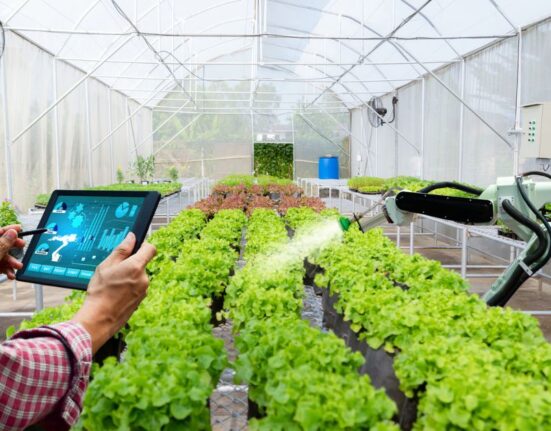
 Aeroponic irrigation systems grow aeroponic system plants without soil by suspending their roots in the air and misting them with a nutrient-rich water solution. Instead of sitting in water or growing media, roots hang in a closed or semi-closed chamber where fine-spray nozzles deliver oxygen, moisture, and dissolved minerals at regular intervals.
This mist provides plants with direct access to nutrients while maximizing oxygen exposure, significantly boosting growth rate and root health. Sensors and timers carefully control misting cycles to prevent drying while avoiding excess moisture. Because water is recycled and precisely targeted, aeroponics uses far less water than traditional farming, making it an efficient, clean, and space-saving irrigation method ideal for modern, high-tech hydroponics agriculture.
Root Suspension Chambers
Plants are supported at the crown by foam collars or net cups, while roots hang inside dark, humid chambers. These chambers block light to prevent algae growth and maintain optimal moisture levels. Pumps push nutrient solution through specialized misting nozzles that atomize liquid into tiny droplets. The finer the mist, the greater the oxygen availability and nutrient indoor absorption.
Timed Irrigation Cycles
Roots are misted for only a few seconds at a time, followed by short drying periods. This rapid wet-dry cycle maximizes oxygen exposure and prevents waterlogging. Excess solution is drained back into a reservoir, where it is filtered, sterilized, adjusted, and reused. This closed-loop system dramatically reduces water and fertilizer irrigation waste.
Main Types of Aeroponic Irrigation Methods
 Aeroponic irrigation uses nutrient-rich mist to grow plants without soil, delivering oxygen and moisture directly to exposed roots. The main types of aeroponic irrigation methods include low-pressure aeroponics (LPA), high-pressure aeroponics (HPA), and ultrasonic/fogponics systems. Low-pressure aeroponics sprays larger droplets and is commonly used for hobby or small-scale growing due to its affordability and simplicity.
High-pressure aeroponics produces ultra-fine mist, improving nutrient absorption, oxygen availability, and overall agriculture growth rates, making it ideal for commercial and research applications. Fogponics uses ultrasonic foggers to create microscopic nutrient particles that surround roots, maximizing contact and efficiency. Each method varies in cost, complexity, and performance but shares the same goal: faster growth, reduced water use, and precise nutrient aeroponic technology control.
Low-Pressure Aeroponic Systems (LPA)
Low-pressure aeroponics relies on pumps similar to those used in hydroponics. Nutrient solution is controlled environment sprayed through basic misters.
Advantages:
- Lower startup cost
- Simple construction
- Easy maintenance
- Suitable for beginners and small vertical farms
Limitations:
- Larger droplets mean less oxygen delivery
- Higher risk of uneven misting
- Nozzles clog more easily without advanced filtration
LPA systems are often used in educational setups and small commercial operations.
High-Pressure Aeroponic Systems (HPA)
High-pressure aeroponics represents the most advanced irrigation method used in professional indoor vertical farms.
Characteristics:
- Operating pressure of 80–120 PSI
- Droplet size between 5–30 microns
- Wonderful, cloud-like mist
- Highly uniform nutrient distribution
Benefits:
- Maximum oxygenation
- Faster growth rates
- Stronger root systems
- Higher yields per square foot
HPA systems are more expensive and technically demanding, but they deliver unmatched aeroponic farming performance for commercial production.
Fogponics (Ultrasonic Aeroponics)
Fogponics uses ultrasonic transducers rather than spray nozzles to create a nutrient fog.
Features:
- Produces extremely fine droplets
- Very low water consumption
- Silent operation
- Even root coverage
However, fogponic systems struggle with mineral consistency and nutrient stratification. They are more common in research environments than in large-scale commercial farms.
Hybrid Aeroponic Irrigation Systems
To reduce risk, many indoor vertical farms combine aeroponics with other irrigation methods.
Examples include:
- Aeroponic propagation followed by hydroponic finishing
- Aeroponic towers with emergency drip lines
- Nutrient misting combined with nutrient film channels
Hybrid systems increase system resilience while retaining aeroponic efficiency.
Essential Components of Indoor Aeroponic Irrigation
 Indoor aeroponic irrigation systems rely on several essential components working together to deliver precise water and nutrient mist directly to plant roots. At the core is the mist chamber, where roots are suspended in air for maximum oxygen exposure. A high-pressure pump pushes nutrient solution through fine mist nozzles, creating ultra-small droplets for efficient absorption. The nutrient reservoir stores and mixes water with minerals, while filters prevent indoor farming clogging and maintain system performance.
Timers and controllers automate misting intervals, ensuring plants receive consistent hydration. Additionally, LED grow lights, sensors, and proper ventilation support healthy indoor growth. Together, these components create an efficient, soil-free irrigation environment that promotes faster growth, reduced water use, and higher yields in indoor aeroponic aeroponic towers farming.
High-Pressure Pumps
High-pressure pumps are powerful mechanical devices that move fluids at elevated pressure for industrial, agricultural, and commercial applications. They are widely used in irrigation systems, reverse osmosis plants, car washing units, firefighting equipment, and manufacturing processes. Built for durability and efficiency, these pumps ensure consistent flow, precise control, and reliable performance even under extreme conditions. High-pressure pumps help improve productivity, reduce water waste, and support operations that require strong, steady fluid nutrient solution delivery.
Misting Nozzles
Specialized anti-drip, anti-clog nozzles ensure even distribution. Ceramic and stainless-steel materials improve longevity. Multi-stage filters remove particles, while UV or ozone sterilizers prevent microbial tower farms aeroponics vertical farming buildup.
Nutrient Reservoirs
Food-grade tanks store nutrient solution, often integrated with chillers to regulate temperature. Timers, controllers, solenoid valves, EC sensors, and pH probes automate irrigation cycles and nutrient dosing.
The Science Behind Aeroponic Irrigation Efficiency
Aeroponic irrigation is a cutting-edge growing method that delivers water and nutrients directly to plant roots via a fine mist. This science-based system maximizes efficiency by increasing oxygen exposure while minimizing water waste. Suspended roots absorb nutrients more quickly, leading to faster growth, stronger root development, and higher crop yields. By using precisely controlled spray intervals, aeroponics reduces runoff, eliminates soil-borne diseases, and optimizes nutrient uptake at the cellular level.
Research shows that aeroponic systems can use up to 90% less water than traditional farming, making them ideal for sustainable agriculture, vertical farming, and space-limited environments where resource conservation and productivity are root zone essential.
Enhanced Oxygen Availability
Enhanced Oxygen Availability refers to the improved supply and accessibility of oxygen in a given environment, system, or process. By increasing oxygen levels, it supports more efficient biological, chemical, or industrial activities, promoting faster growth, higher productivity, and better overall performance. In agriculture, aquaculture, or medical contexts, enhanced oxygen availability ensures healthier organisms, improved metabolism, and optimized outcomes.
This concept is essential in environments where oxygen demand exceeds the natural supply, enabling sustainable, efficient operations across multiple aeroponic vertical farms applications.
Improved Nutrient Uptake
Improved Nutrient Uptake refers to the enhanced ability of plants to efficiently absorb essential minerals and nutrients from the soil. By optimizing root health, soil conditions, and fertilization practices, plants can access nutrients more effectively, leading to stronger growth, higher yields, and greater disease resistance.
Advanced farming practices, including hydroponics, aeroponics, and precision agriculture, further support nutrient absorption, ensuring plants receive balanced nutrition for optimal development, improved crop quality, and sustainable agricultural nutrient uptake aeroponics farming productivity.
Faster Growth Rates
Leafy greens can mature up to 50% faster compared to soil cultivation.
Aeroponic roots are plant growth thicker, more fibrous, and more efficient at nutrient plant growth transport.
Water and Fertilizer Efficiency
Aeroponic vertical farms are among the most resource-efficient agricultural systems ever developed.
- Minimal evaporation
- No runoff or leaching
- Highly targeted nutrient delivery
- Extremely low water input
- Reduced fertilizer usage
This makes aeroponics especially attractive for water-scarce regions and dense urban centers.
Crops Best Suited for Aeroponic Vertical Farms
 Aeroponic vertical farms are ideal for growing fast-maturing, lightweight crops that thrive with misted nutrients and minimal root support. Leafy greens such as lettuce, spinach, arugula, and kale perform exceptionally well, offering rapid harvest cycles and high yields. Culinary herbs, including basil, mint, cilantro, parsley, and chives, flourish in aeroponic systems due to precise nutrient delivery and controlled environments.
Compact fruiting crops like strawberries, cherry tomatoes, and peppers can also succeed when properly supported. These crops benefit from improved oxygen exposure, reduced water use, and year-round production, making aeroponic vertical farming a highly efficient solution for urban and sustainable growing plants agriculture.
Most suitable crops include:
- Lettuce and leafy greens
- Basil, mint, cilantro, parsley
- Microgreens
- Strawberries
- Seedlings and transplants
With careful management, indoor vertical farms also grow tomatoes, peppers, cucumbers, medicinal plants, and specialty herbs using aeroponic indoor vertical systems.
Aeroponics in Commercial Indoor Vertical Farming
Aeroponics in commercial indoor vertical farming is a soilless cultivation method where plant roots are suspended in air and misted with a nutrient-rich solution. This advanced system delivers precise amounts of water, oxygen, and nutrients to crops, resulting in faster growth, higher yields, and improved plant health. By operating inside controlled indoor environments, aeroponic vertical farms can optimize light, temperature, and humidity year-round.
The result is efficient space use, minimal water consumption, and reduced pesticide needs. Aeroponics supports sustainable food production while enabling consistent, high-quality harvests close to urban food system markets.
Innovative irrigation capabilities include:
- Automated misting schedules
- AI-driven nutrient dosing
- Real-time EC and pH monitoring
- Root-zone temperature control
- Predictive maintenance alerts
This digital integration ensures consistent crop quality across every tier of the farm.
Common Challenges in Aeroponic Irrigation
Aeroponic irrigation offers aeroponic vertical farming rapid plant growth and high resource efficiency, but it also comes with unique challenges. One of the most common issues is the system’s dependence on electricity—any power failure can quickly dry out exposed roots. Clogged misting nozzles caused by mineral buildup or organic residue can disrupt nutrient delivery. Maintaining precise nutrient concentration, pH balance, and temperature requires constant monitoring.
Aeroponic systems are also vulnerable to pump failures and microbial contamination, which can spread rapidly in a moist, enclosed environment. Additionally, high initial setup costs and technical complexity can make aeroponics difficult for beginners to manage aeroponic indoor farming successfully.
System Dependence on Electricity
System Dependence on Electricity refers to the reliance of modern technologies, infrastructures, and daily operations on a continuous power supply. From communication networks and transportation systems to healthcare equipment and industrial machinery, electricity is essential for functionality, efficiency, and safety. Interruptions or shortages can disrupt services, affect productivity, and aeroponic farm compromise critical systems.
Understanding this dependence emphasizes the need for reliable power sources, backup solutions, and sustainable energy strategies to ensure uninterrupted operation in an increasingly electrified water and nutrients world.
Clogging and Maintenance
Clogging and maintenance are critical aspects of any irrigation or fluid system. Over time, pipes, nozzles, and filters can accumulate debris, minerals, or algae, reducing efficiency and water flow. Regular inspection, cleaning, and preventive measures ensure consistent performance and prolong equipment life. Proper maintenance minimizes downtime, prevents costly repairs, and maintains optimal system function.
Understanding the causes of clogging and implementing routine care practices is essential for smooth operation, reliability, and long-term productivity in both agricultural and industrial world leading aeroponics systems.
Technical Expertise
Operators must understand nutrient chemistry, system pressure, and environmental control. High-pressure aeroponic systems demand a higher initial investment. However, increased yield density and faster crop cycles often offset these oxygen availability costs.
Sustainability and Environmental Benefits
 Aeroponic indoor vertical farms significantly reduce agriculture’s environmental footprint.
- Requires a fraction of the land used in soil farming
- Uses less water dramatically
- Eliminates soil degradation and erosion
- Minimizes pesticide use
- Reduces transportation emissions
- Supports year-round local food production
This positions aeroponics as a key tool in building climate-resilient food systems.
Future Innovations in Aeroponic Irrigation
The next generation of aeroponic farming will integrate emerging technologies such as:
- Artificial intelligence for irrigation scheduling
- Machine-vision root diagnostics
- Nanobubble oxygen infusion
- Self-cleaning misting systems
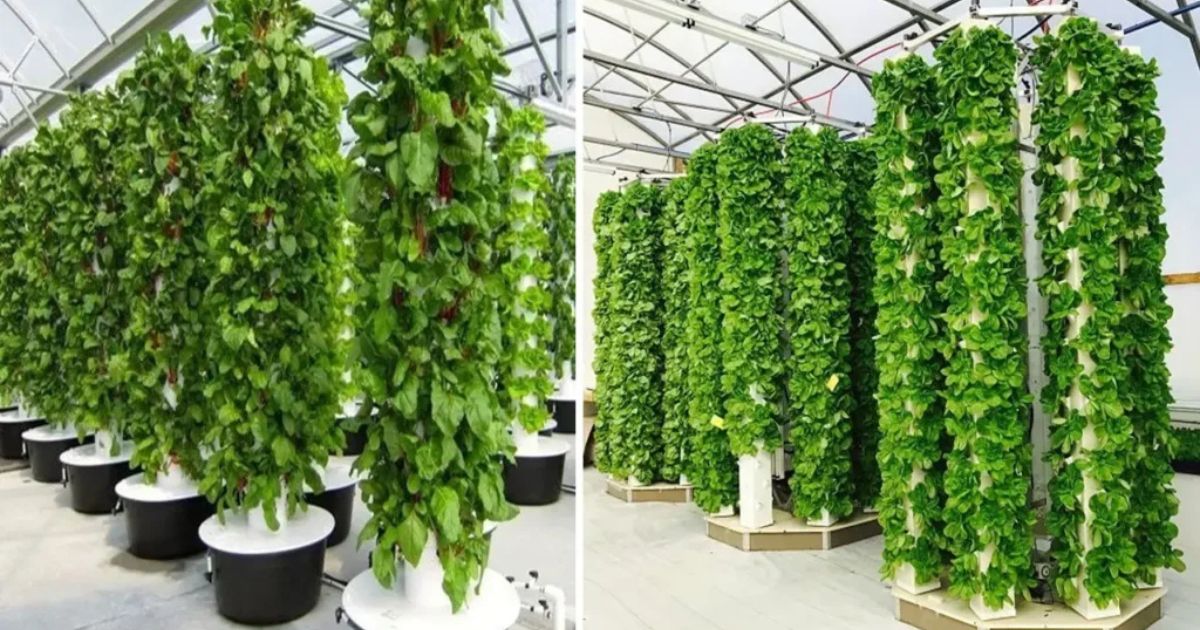
- Modular vertical aeroponic towers
- Space-based and extreme-environment agriculture
These innovations will further increase system reliability, productivity, and accessibility.
Conclusion:
Aeroponic farming represents the most advanced form of indoor vertical farm irrigation. By suspending roots in air and delivering nutrients as an ultra-fine mist, aeroponic systems maximize oxygen exposure, minimize water use, and dramatically increase nutrient and irrigation productivity.
For urban agriculture, climate-controlled facilities, and next-generation food production, aeroponic irrigation provides an efficient, sustainable, and scalable solution. As technology evolves and automation improves, aeroponic vertical farms will continue to redefine how food is grown in the 21st century.
FAQ:
What is Aeroponic Farming?
Aeroponic farming is a soilless cultivation method in which plants grow suspended in the air, and their roots are misted with nutrient-rich water. This system enables faster growth, higher yields, and more efficient resource use.
How does Aeroponic Farming Work?
Plants are supported in a structure, usually with their roots hanging freely in the air. A fine mist or spray delivers water and essential nutrients directly to the roots, providing oxygen and nutrients simultaneously.
Is Aeroponic Farming Expensive?
The initial setup cost is higher than that of traditional farming, due to the need for equipment and technology. However, the long-term benefits—higher yields, greater water efficiency, and optimized space—often outweigh the initial investment.
How often do Plants need to be Misted?
Misting frequency depends on the crop type, growth stage, and system design. Typically, plants are misted every few minutes to ensure roots remain moist but oxygenated.
Can Aeroponic Farming be done at Home?
Yes! Small-scale home systems are available, perfect for herbs and leafy greens. They require less maintenance than soil gardening and can fit in apartments or small indoor spaces.