
If you’ve ever stood in a field and wondered how long it takes for corn crops to grow, you’re not alone. Corn growth cycles can feel mysterious at first glance, especially when you see tiny seedlings transform into towering stalks loaded with ears. The truth is, corn growth follows a predictable rhythm, almost like nature’s clock, guided by temperature, moisture, and time. From the moment you plant corn seeds to the day you harvest corn, the journey typically takes 60 to 120 days, depending on corn varieties, climate, and growing conditions.
Corn growth isn’t just about counting days after planting. It’s about understanding growth stages, from germination and early growth to vegetative and reproductive stages. Each growth stage plays a role in determining yield, kernel development, starch accumulation, and final moisture content. Whether you’re growing sweet corn in a backyard garden or field corn across the corn belt, knowing the stages of growth helps you make better decisions all season long.In this guide, we’ll walk through the entire development of corn, explain what happens at each stage, and break down exactly how long corn needs from planting date to harvest. By the end, you’ll be able to check the corn like an agronomist and understand what your crop is telling you.
Understanding the Corn Plant and Its Life Cycle
The corn plant undergoes a fascinating transformation throughout the growing season. Unlike many crops, corn has distinct growth stages, making it easier to track its development. From seedling to stalk, from tassel to cob, every step follows a biological blueprint.A corn plant begins its life as a dry kernel, packed with starch and essential nutrients. Once planted, it absorbs water, triggering the germination process. Over time, the plant growth accelerates, producing leaves, elongating the stalk, and eventually forming reproductive structures. This process encompasses both vegetative stages, where leaves and roots predominate, and reproductive stages, where ears, silk, and pollen take center stage.
Understanding these stages of corn isn’t just academic . What Is An Agricultural Future? Learn The Basics Farmers rely on this knowledge to manage pests, apply fertilizer, and time irrigation. Home gardeners also benefit, especially when growing sweet corn for fresh consumption. Regardless of the scale, understanding how corn growth works helps ensure healthier plants and better yields.
Planting Corn: From Seed Packet to Soil

Everything begins on planting day. When you open a seed packet, you’re holding potential. Each kernel is a future corn plant waiting for the right conditions. To plant corn successfully, timing and technique matter.Warm soil is necessary for corn to sprout and develop robustly. Most agronomists recommend planting when the soil temperature at the soil surface reaches 50°F (10°C) or higher. Planting depth is typically around 1.5 to 2 inches, allowing the seed to access moisture while maintaining a warm enough temperature for germination to occur.
Spacing also matters. Corn is wind-pollinated, so planting in blocks rather than single rows improves pollination later. Whether you’re planting field corn or sweet corn, proper spacing ensures that there are enough ears per plant and reduces competition for nutrients.Once planted, the kernel begins to absorb water. This simple act sets the entire corn growth process in motion.
Germination and Emergence
Germination is the first stage of growth, and it occurs rapidly under optimal conditions. Within 4 or 5 days, the kernel absorbs water and activates enzymes that convert stored starch into energy. This fuels the emergence of the corn seedling.During this phase, the mesocotyl elongates, causing the coleoptile to be pushed toward the soil surface. The coleoptile acts like a protective sheath, guiding the first leaf upward. The days to emergence usually range from 5 to 10 days, based on the amount of moisture and temperature of the soil.
Cool soils slow everything down, while warm, moist soils accelerate processes. Poor conditions can delay emergence or cause uneven stands, which later affect pollination and yield. Early growth may seem quiet above ground, but below the surface, critical development is happening.
Early Growth and Seedling Development
Once the first leaf breaks through the soil surface, early growth begins. The corn seedling now starts producing leaves at a steady pace. The first leaf is rounded at the tip, while the second leaf and those that follow are pointed.At this stage, the growing point remains below ground, protected from early stress. This is why young corn can survive light frost. The number of leaves increases rapidly, and the leaf collar system becomes essential for identifying growth stages.
Early growth sets the tone for the entire season. Stress from pests, What Soil is Best For Growing Soybeans poor moisture, or compacted soil can stunt development. Healthy seedlings, on the other hand, build strong roots and stalks that support later reproductive growth.
Vegetative Growth Stages of Corn
The vegetative stages are all about building structure. These stages are identified by counting leaf collars, the visible band where the leaf blade meets the stalk. Each collar marks a new stage in the vegetative growth.
For example:
- V1: first leaf collar visible
- V6: six leaf collars visible
- V12 and beyond: rapid stalk elongation
During vegetative growth, the growing point moves above ground. The corn plant focuses on leaf production, root expansion, and nutrient uptake. Nitrogen demand increases, and the plant requires consistent soil moisture.
This period is critical. Any stress during vegetative stages can reduce the number of kernels per cob later on. Healthy leaves act like solar panels, capturing sunlight and fueling growth and development.

Reproductive Growth Stages of Corn
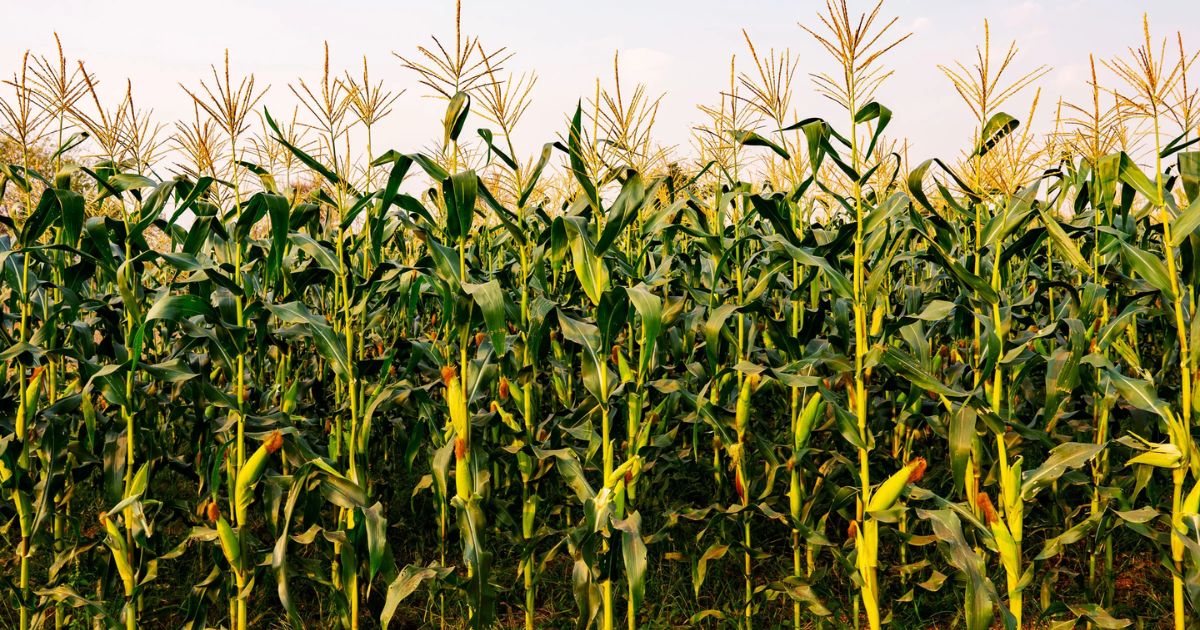
Reproductive stages begin with tasseling. The tassel forms at the top of the stalk and releases pollen. Shortly after, silk emerges from the ear. Each silk connects to a potential kernel on the cob.Pollination happens when pollen lands on the silk. This is a delicate process that is influenced by the weather. Heat, drought, or poor pollen shed can reduce kernel set. Successful pollination leads to fertilization and kernel development.
Silking marks a significant milestone in corn growth. From here on, the plant redirects energy from its leaves to its ears. Reproductive growth determines final yield, making this stage one of the most important in the entire growing season.
Corn Growth Stages Explained Simply
When people talk about corn growth stages, they’re usually referring to the combination of vegetative and reproductive stages. Together, these stages of growth explain how corn develops from seed to harvest.
Vegetative stages build the plant’s framework. Reproductive stages fill that framework with grain. Understanding both helps farmers track progress throughout the growing season and respond to issues quickly.This structured system enables growers to accurately predict days to maturity and plan corn harvest operations efficiently.
Growing Conditions for Corn
Corn needs specific growing conditions to thrive. Warm temperatures, adequate sunlight, and consistent moisture are non-negotiable. Corn requires approximately 1 to 1.5 inches of water per week, especially during the tasseling and silking stages of growth.
Climate and growing conditions affect the time it takes for corn to mature. Flood Irrigation Pros and Cons In cooler regions, growth slows. In warmer climates, corn may reach maturity more quickly, but it still faces heat stress.Good soil fertility supports strong stalks, healthy leaves, and full ears. Balanced nutrition helps the corn plant withstand pests and environmental stress.
Soil Temperature, Moisture, and Plant Growth
Soil temperature controls the pace of early development. Cold soil delays germination, while warm soil accelerates it. Soil moisture ensures the kernel can absorb water and maintain growth.Too much moisture can suffocate roots, while too little causes stress. Corn requires balance. Healthy soil supports steady plant growth and efficient nutrient uptake.
Corn Varieties and Days to Maturity
Different corn varieties mature at different rates. Sweet corn often matures in 60–90 days, while field corn may take 100–120 days. Hybrid varieties are bred for specific traits, such as disease resistance or shorter days to maturity.In the corn belt, hybrids are selected to match local climate patterns. Choosing the right variety ensures the crop finishes before frost.
Growing Degree Days and Timing
Growing degree days (GDD) measure the accumulation of heat. Corn growth depends more on temperature than on the number of calendar days. Each growth stage requires a certain number of GDDs.Tracking GDDs helps predict when tasseling, silking, and black layer will occur. This makes planning easier and more precise.
Corn Throughout the Growing Season
Corn undergoes significant changes throughout the growing season. From a few leaves to a towering stalk, the transformation is fast and impressive. Each stage builds upon the last, culminating in ear formation and grain fill. What Is The Autumn Harvesting? The development of corn is a continuous process influenced by weather, management, and genetics.
Pests, Stress, and Growth Challenges
Pests can damage leaves, stalks, and ears. Early detection is key. Stress during critical stages can reduce both the number and size of kernels.Healthy plants resist pests better, highlighting the importance of good growing conditions for corn.
Harvesting Corn: When Is It Ready?
Harvesting depends on the type of corn. Sweet corn is ready at the milk stage, while field corn reaches maturity at the black layer. Moisture content drops as kernels harden and starch accumulates.The dough stage signals that kernels are filling. The black layer indicates physiological maturity.
Checking and Harvesting Corn Properly

To check the corn, peel back the husk and examine kernel development. Look for firm kernels and proper moisture content. Ears per plant and husk color also provide clues.Harvest corn at the right time to maximize quality and yield.
Conclusion
In conclusion, the time it takes for corn crops to grow depends on the type of corn, the growing conditions, and the management practices employed. On average, most corn varieties take 60 to 100 days from planting to harvesting. Sweet corn usually matures faster, often within 60–85 days, while field corn may require 90–100 days or more to fully develop.From seedling emergence and germination to tassel formation, silk development, pollination, and kernel filling, What is the Process of Growing Soybeans each stage of corn growth plays a critical role in determining the final yield. Proper soil temperature, adequate moisture, sunlight, and nutrient-rich soil are essential for healthy corn plant growth and the formation of a strong cob within the husk.
Understanding the corn growth timeline helps farmers and gardeners plan their planting, irrigation, and harvesting activities at the optimal time. With favorable growing conditions and good care, corn can grow efficiently and produce high-quality kernels, making it one of the most reliable and rewarding crops of the growing season.
FAQ
How long does it take for corn to grow from planting to harvest?
Most corn varieties take 60 to 100 days to grow from planting to harvesting. Sweet corn matures faster, while field corn usually takes longer.
What soil temperature is best for planting corn?
For corn seeds to germinate, the soil temperature should be between 10 °C and 12°C (50°F and 55°F). Warm soil facilitates faster germination and promotes healthy seedling growth.
How many growth stages does a corn plant have?
Corn growth stages include germination, seedling, vegetative growth, tassel emergence, silk emergence, pollination, kernel development, and maturity.
When is the right time to harvest corn?
When the kernels are solid and whole, corn is ready to be harvested. The husk has turned green and is dry, and the silk has become brown and dry.
What factors affect corn growth and yield the most?
Key factors include soil quality, moisture, sunlight, temperature, hybrid selection, and proper pollination. Good growing conditions ensure healthy corn growth and higher yields.